Dignify through Design
The Design of the 2026 World Cup, Reviewed
A late (but comprehensive) design review of the 2026 FIFA World Cup.
Dignify through Design
A late (but comprehensive) design review of the 2026 FIFA World Cup.
Divest
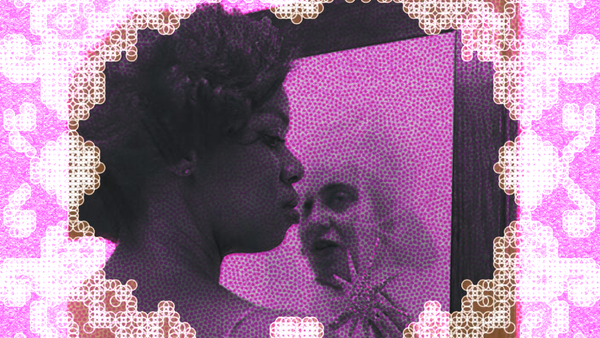
Carrie Mae Weems photographed a Black woman in front of a mirror who asked: “Mirror, Mirror on the wall, who’s the finest of them all?” And the mirror answered: “Snow White, you Black Bitch, and don’t you forget it.” Perhaps exile begins there. At the mirror. You look
Dignify through Design
When we opened submissions for ÀROKÒ Anthology No. 1: Folklore from Africa & the Diaspora, we invited Black writers across Africa and the diaspora to reimagine folklore as a living archive, one shaped by memory, resistance, migration, and imagination. The response surpassed our hopes. We received more than 126 submissions
Divest
Like the light of a month-long flashbulb, the 2026 World Cup still lingers in the corners of our eyes, its flickering afterimage continuing to color our peripheral vision. What a terrible, and terrific spectacle; what joy, what sorrow—what profound contradiction. As happens every four years, the cup brought
Community
Keep score and most of us mean who won. The Àrokò Cooperative takes the word elsewhere: from scarification to sheet music, museum vitrines to library cards, asking who gets to write the record of reality, and what a community might choose to count as care.
Community
Between visiting a sick parent and his daughter's first birthday, Jeremy Capps wrote "La La" for anyone who's ever let a new infatuation take over.
Community
In these times of digital existence, in-person gatherings allow for connections far beyond the confines of a comment section or shop listing.
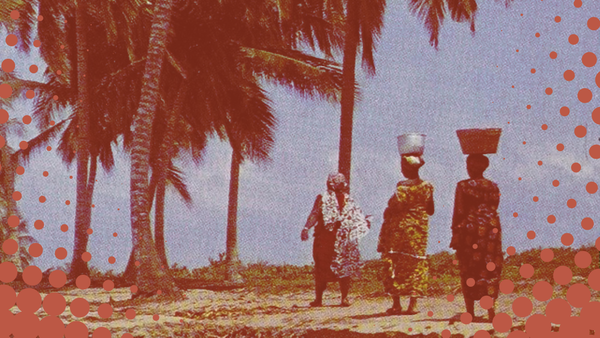
Across northern Ghana, hundreds of women live in "witch camps," exiled after accusations that follow death, inheritance disputes, or success. Beneath the language of the supernatural lies a familiar political economy: the expulsion of women from land, rights, and belonging.
I followed a DJ to a phone-free, clown-themed dance floor and stumbled into a living experiment in neo-Luddism. From luxury dumbphones to sweaty nights off-camera, two aesthetics of opting out are emerging: “luxury low-tech” and “phone-free presence”.
Ancestry is often seen as the past, but in design it’s a living system. Every form carries memory. To create what lasts, we don’t invent from nothing. We translate what came before into what comes next.
How Àrokò Cooperative designs radical solutions for individuals and organizations.
A home for critique, reflection, and conversation at the intersection of Blackness and design.
What if “Sinners” and “Is God Is” belong to the same spiritual universe? Reading the films through the Yoruba Ibeji belief system reveals a meditation on ancestry, protection, Hoodoo, and Black futurity, where twinhood becomes a philosophy of survival.
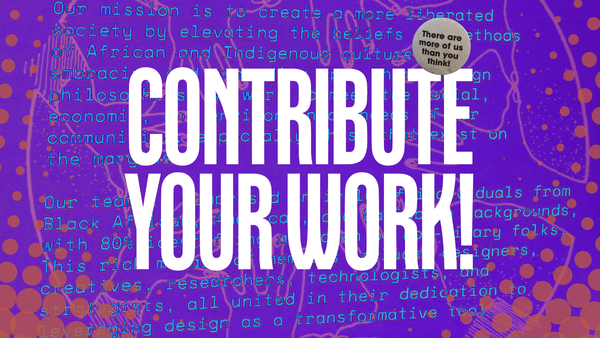
We're actively seeking external contributors to publish on ÀROKÒ.WORLD. We're building a space where Black critical thought and cultural practice can breathe, where storytelling refuses the noise and commodification that dominate other platforms. We'd love to amplify your work. Who We're
There have been several Gen Z articles and social media think pieces released over the past few weeks about what people think of Gen Z, and clearly, we’ve amassed a large enough fan base to have people talking about us this much. As Lisa Lopes once stated, “all press
I came to Mexico City twice, seventeen years apart. The first time with little money and no map, the second just before coordinated raids, gun battles, and bombings spread nationwide. Between those visits: drug war expansion, foreign capital, and a city learning to live with both.
In a world of fast outputs, not everything is meant to last. This roundtable begins with a simple question: what is actually worth our time, our care, and our attention?
A reflection on the quiet grief of letting go of people who are still alive, navigating loss and healing without avoidance. For folks carrying this unseen weight, may these words offer comfort and a gentle reminder: we see you.
I’ve seen enough. I’ve heard enough. My loved ones have heard enough (of me). It’s time to bring it to the roundtable.
In conversation with ÀROKÒ.WORLD, Kym Dominique-Ferguson reflects on identity, the roots of his work, and the responsibility he feels toward the artists who come after him.
In conversation with ÀROKÒ.WORLD, Happie Micha Edwards reflects on ancestry, fear, imagination, and the radical act of nourishment.
When Happie Micha Edwards stepped onto the ‘Inside Madpoetix Sudios’ stage in Montreal, a backdrop of chip bags became an unexpected stage set. Through storytelling, dub-poetry, and audience interaction, they revealed how performance can expand the possibilities of spoken word.
Across northern Ghana, hundreds of women live in "witch camps," exiled after accusations that follow death, inheritance disputes, or success. Beneath the language of the supernatural lies a familiar political economy: the expulsion of women from land, rights, and belonging.
In 2026, we're watching the breaking point accelerate, a cultural rupture where authenticity confronts algorithmic perfection, and designers must decide whether to decorate capital or design for human care.