4 Truths to Derail the GenZ Hate Train ✋🏽

There have been several Gen Z articles and social media think pieces released over the past few weeks about what people think of Gen Z, and clearly, we’ve amassed a large enough fan base to have people talking about us this much. As Lisa Lopes once stated, “all press is good press,” so people are clearly obsessed with whatever Gen Z has going on.
But in all seriousness, there has been a level of defamation and an outspoken desire to criticize our behaviors, our decision-making, and even question the intellectual abilities of Gen Z. This has resulted in widespread misconceptions about who we are as a generation and what we stand for.
Whoever started this Gen Z hate train, I need it to stop immediately. As a fellow older Gen Z, I’m here to debunk all your trendy Gen Z hate journalism.
Myth Derail #1: Most Gen Z are still kids
According to pew research, Gen Z range from 1997 through roughly 2012. Which means that if you fall in the upper half of Gen Z, like myself, the majority of us are closer to 30 than we are to 14, which is at the younger end of Gen Z.
Logically, we can agree that a 30-year-old and a 14-year-old are at completely different stages of life. So if the majority of Gen Z are in their 20s or late 20s, approaching their 30s, we can no longer assume that most of Gen Z are children.
In reality, most of Gen Z are already in the workforce and have experienced real, adult societal issues.
Which leads us to the next myth.
Myth Derail #2: Gen Z are lazy and don’t want to work
A recent Fortune article was resurfaced claiming that Gen Z are being fired at alarming rates due to laziness, lack of initiative, and poor attitude.
But I would argue that maybe Gen Z simply don’t want to play into the political and performative optics of the workplace, especially when working hard no longer guarantees a life beyond survival.
The once-promised “American Dream,” where a $50K salary could afford a $100K–$300K home, is no longer accessible. Today, $50K barely meets the cost of living in many metropolitan areas. In many states, minimum wage still is around $8 an hour, while inflation and everyday expenses continue to rise. Rent alone can take up at least half of a monthly paycheck, even with a roommate.
Now more than ever, in this uncertain political climate, Gen Z care less about climbing the corporate ladder and more about having a real work-life balance, flexibility, autonomy, and a workload that actually matches the wage
However most Boomers, Gen X, and some millennial managers still believe work life balance and autonomy should be a perk that’s earned and worked through the trenches for, not given. Which shouldn’t be the case. One shouldn’t work their fingers to the bone to earn the right to have a life outside of work.
However, many Boomers, Gen X, and even some Millennial managers still believe work-life balance and autonomy should be earned through years of “paying dues,” rather than being a standard. That shouldn’t be the case. No one should have to work themselves to the bone just to earn the right to have a life outside of work.
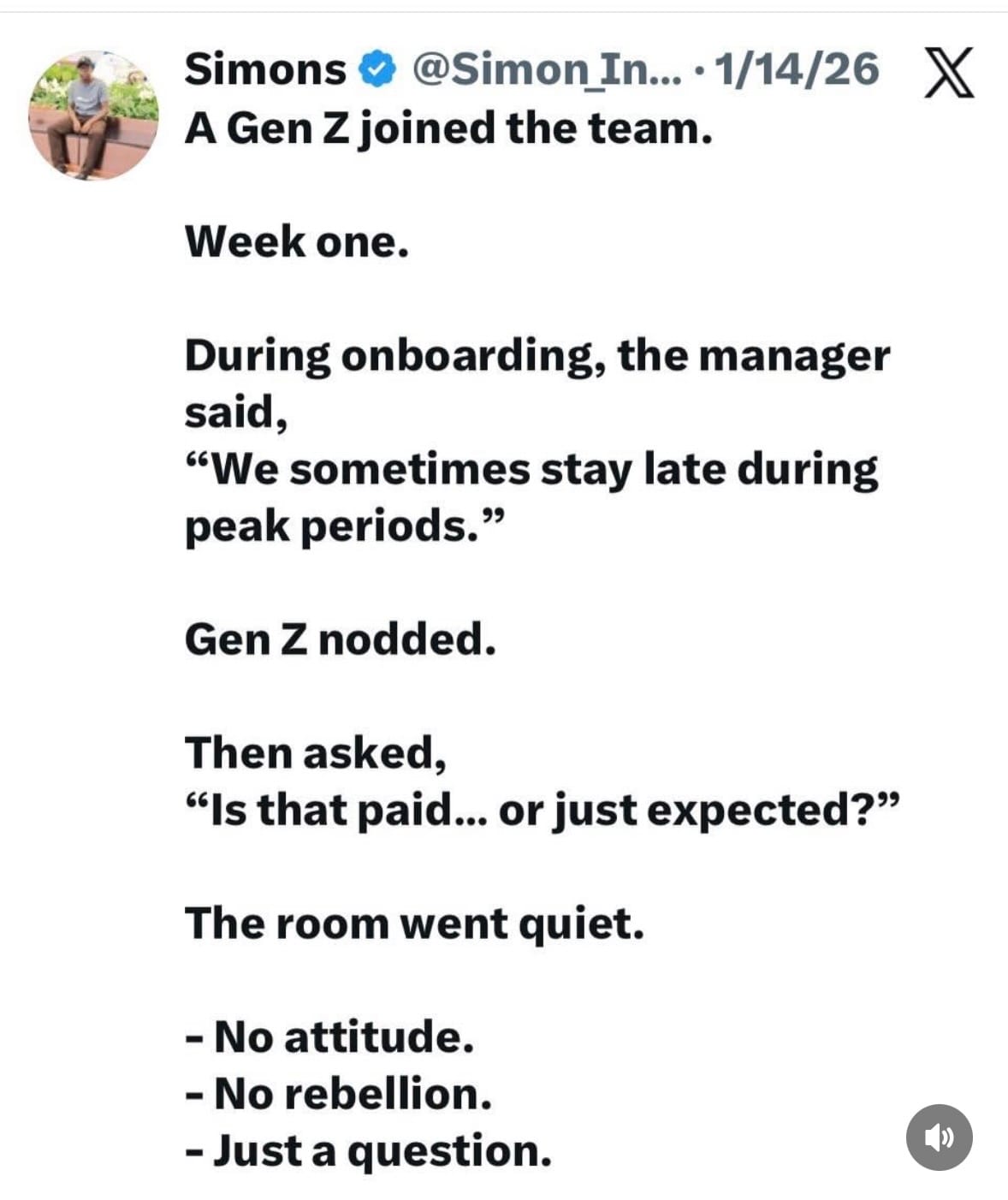
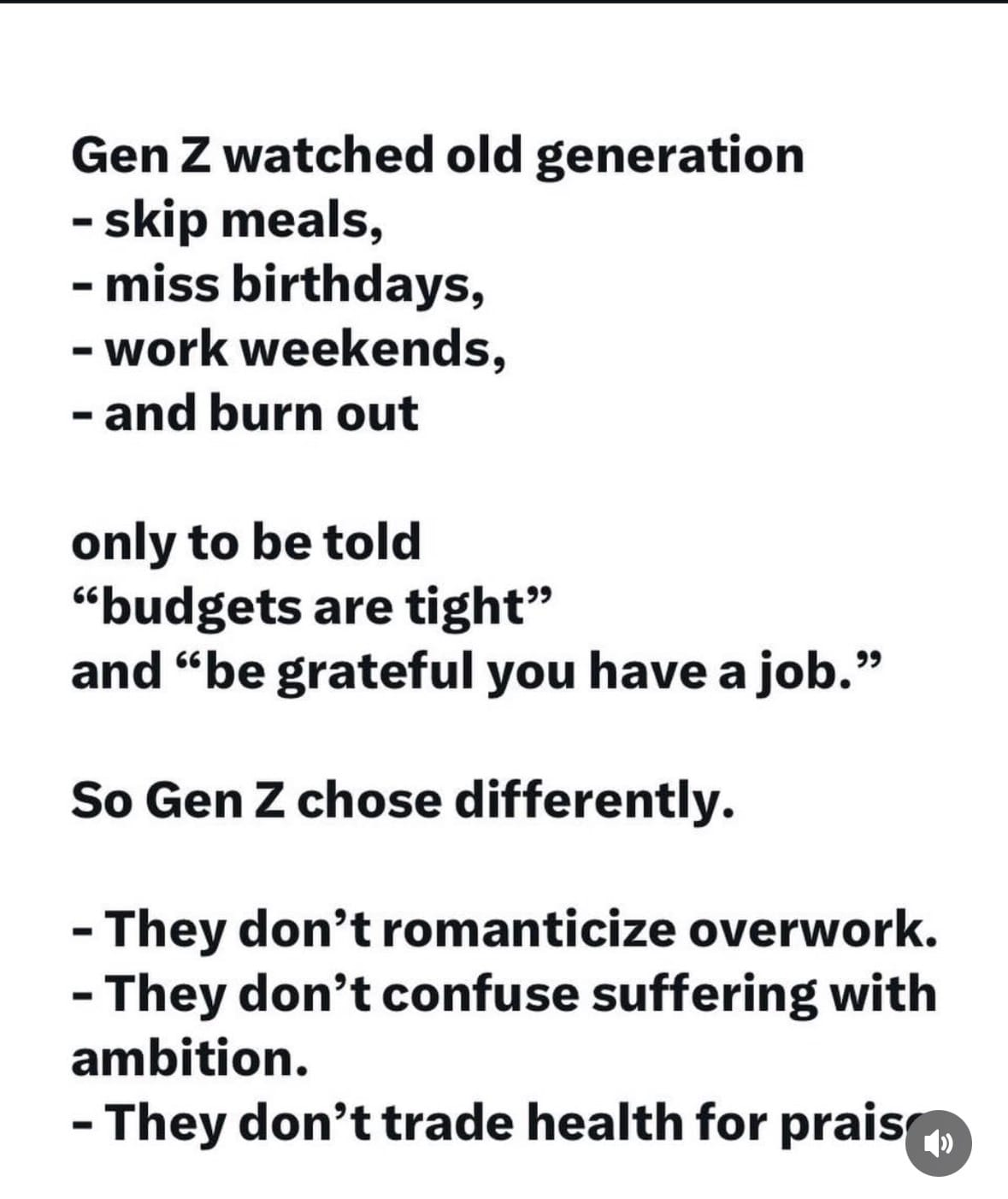
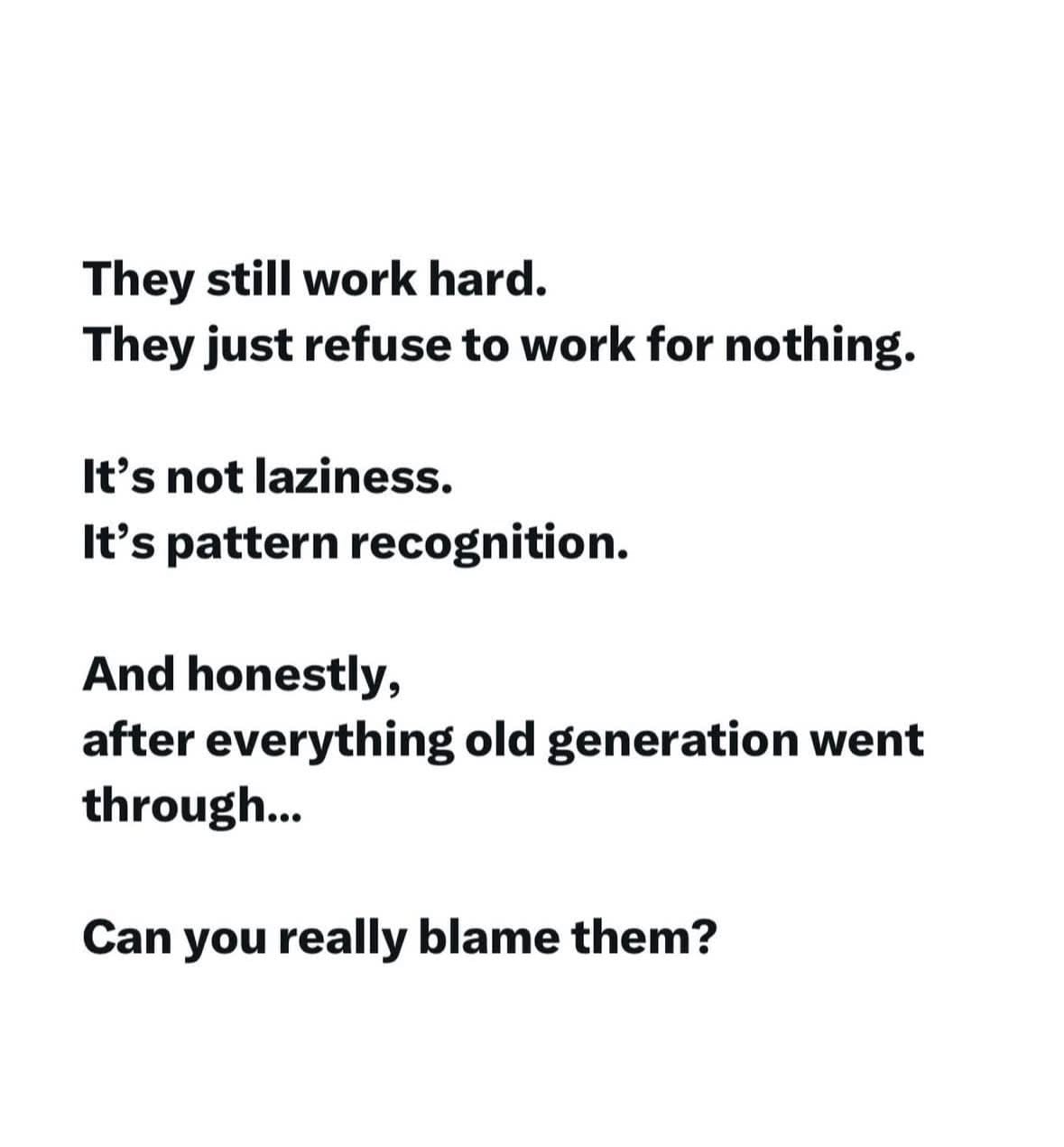
I would argue Gen Z are actually more motivated to work than ever just without the burnout and suffering to prove it. A recent tweet on X highlights this perfectly, calling out toxic workplace norms that we’ve been conditioned to accept, and that Gen Z are now challenging.

Even politically, Gen Z are pushing boundaries and rethinking how things have always been done. A recent example: in September 2025, within 48 hours, Gen Z organized a movement through Discord and helped elevate Nepal’s first woman prime minister. Gen Z have tenacity, especially when it truly matters.
If you want to dive deeper into how this unfolded, read our full breakdown below.
 Aishatu Ado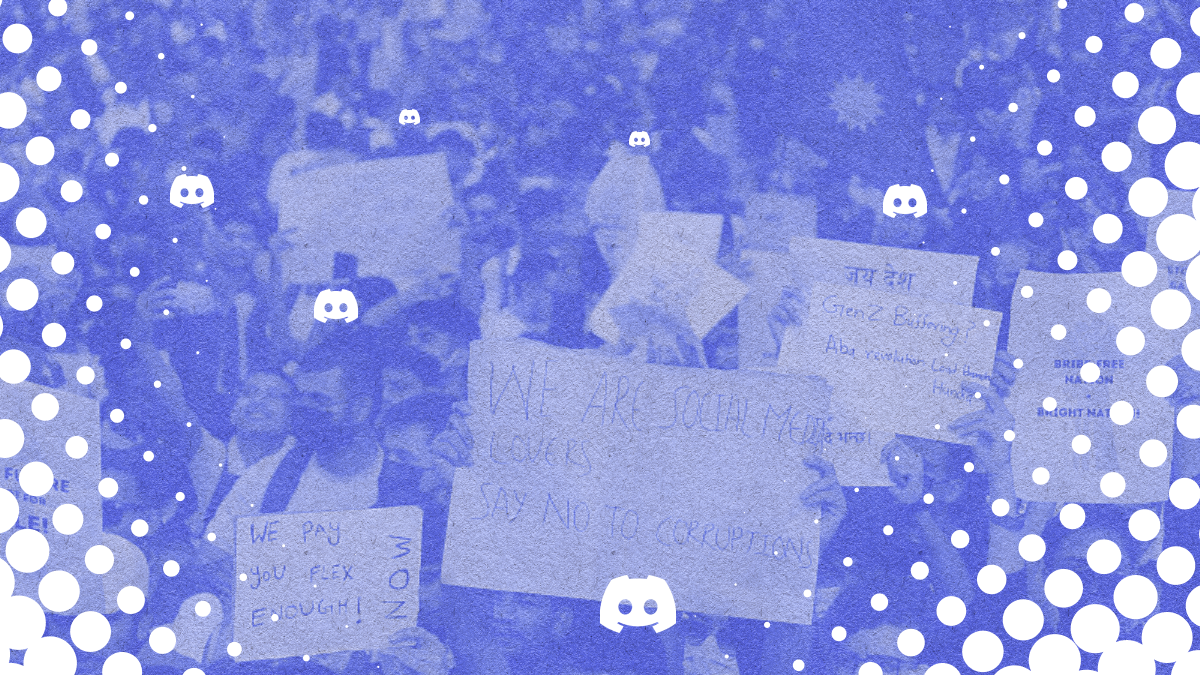
Myth Derail #3: Gen Z can’t Read or write
As a former educator who taught middle school and high school, I can say there are challenges but they’re often misattributed. Many of the students currently struggling in school are Gen Alpha, the generation after Gen Z, who were primarily raised by Millennial parents. So the responsibility should also fall on parenting. Kids should be raised by people, not iPads and social media. Learning starts at home, and if that foundation isn’t there, it’s unrealistic to expect full engagement at school.
That said, the majority of Gen Z absolutely has intellectual capacity and talent. Older Gen Z grew up during the transition into the digital age, meaning much of our foundational learning was still done with pen and paper.
We had the roll-in TV days. We wrote two-page essays in a single class period. We built stamina and academic resilience before technology became central.
By the time tech was introduced, it became an add-on. It made us more adaptable and tech-savvy because we already had the core skills.
So no—we were not taught by the algorithm.
Myth Derail #4: We were taught by the algorithm
A recent Complex Post was released claiming that Gen Z had suddenly discovered “vintage” physical media for the first time.
As someone who grew up with DVDs and VHS tapes and had to fix a tape when it got stuck, I completely reject that statement.
Gen Z did grow up with many of the same “relics” that Millennials and Gen X claim as their own. It’s the latter half of Gen Z and Gen Alpha that may view those things as vintage or old-school.
Older Gen Z still holds a real appreciation for music and media from the ’50s, ’60s, ’70s, ’80s, ’90s, and early 2000s.
That’s actually one of the most beautiful things about Gen Z—as Hannah Montana would say, we experienced the best of both worlds 😉. Hopefully, we can use that perspective to help shape something better for the generations coming after us.
Most of these myths question our competence and intelligence instead of examining the systems and structures that are actually creating division and misunderstanding.
So the next time you want to criticize Gen Z, take a moment to assess the systems around you and make sure you have the facts before turning myths into truth.