Who Put Snow White in My Mirror?

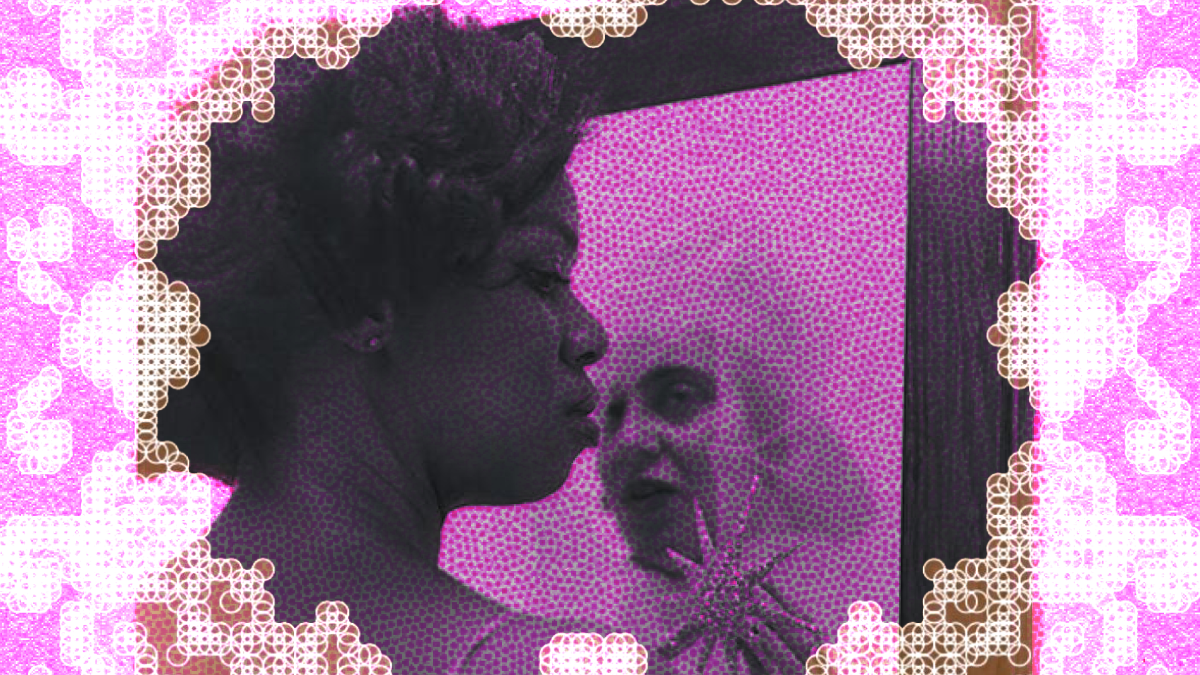
Carrie Mae Weems photographed a Black woman in front of a mirror who asked:
“Mirror, Mirror on the wall, who’s the finest of them all?”
And the mirror answered:
“Snow White, you Black Bitch, and don’t you forget it.”
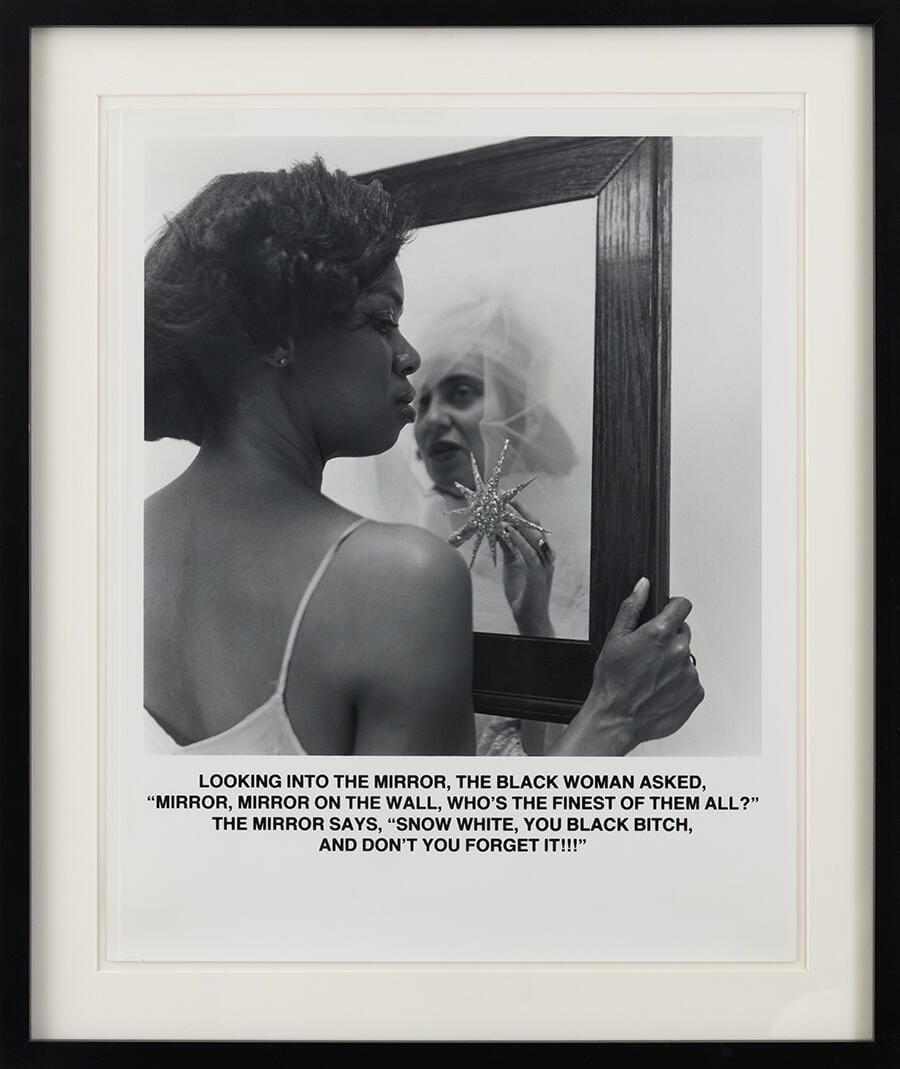
Perhaps exile begins there. At the mirror. You look for yourself and find centuries of whiteness sedimented into the image until the reflection carries someone else’s judgment before it carries your face. Beauty and goodness? They arrive already defined. The mirror shows an image crowded with other people’s eyes. By the time your face comes into view, it has been translated and made to answer questions you never asked. After long enough, you mistake that translation for self-knowledge.
This is exile’s first lesson: the mirror lies. The reflection returns contaminated by the white gaze, by centuries of being told that your face announces wrongly and that your presence demands apology.
The mirror says you aren’t Snow White, that you don’t belong, that this body isn’t a home of any worth. Exile doesn’t require distance. You can be exiled from the country of your birth, your ancestral home, the city you’ve inhabited for decades, even your own skin. Exile means home exists elsewhere—always elsewhere—in a geography you’ve never seen or in a future you’re building from scratch because the present refuses you occupancy.
Carrie Mae Weems photographed Black women at kitchen tables, in front of mirrors, on front porches, spaces that should signify home but often signify performance, containment, the staging of acceptable Blackness. Her lens asks:
What happens when we see ourselves? Really see ourselves, outside the white gaze?
If exile begins in the mirror, fiction offers another way of seeing. As a writer and poet, I want Black characters who see themselves truly and claim that vision. Who understand that exile means home is something you build, not something you find.
Toni Morrison said:
“If there’s a book that you want to read, but it hasn’t been written yet, then you must write it.”
Let's us write the stories where Black characters arrive as complicated and multi-dimensional as any white protagonist who ever fucked up and was forgiven before the final page. Messy characters refuse that bargain of respectablity politics. They build provisional shelters out of desire, rage, humor, spite, and tenderness, structures meant to hold for a night or a sentence.
I am not interested in archetypal character tropes that symbolize resilience. I am interested in characters who stay alive without the intention of primarily becoming inspirational. Who choose themselves in ways that read as selfishness to those who demand sacrifice. Who leave their pain unfiltered and unresolved. Messiness is multiplicity without permission. Life refusing to be edited into obedience. It is the rejection of legibility as virtue.
Audre Lorde taught us the erotic as power, as the yes within ourselves we’ve been raised to fear. But what happens when exile makes that yes unrecognizable? When you look in the mirror and see only what they’ve taught you to see, ugliness and the body that doesn’t belong, instead of the truth your blood knows: you are many worlds learning to shine through one body.
This is joy as resistance: The insistence that we and by extension our fictional kin arrive multidimensional, exit unresolved, fail, and search for home in wrong beds and foreign cities, and mirror work that asks:
Who told you what beautiful means? Who said you had to be good to deserve the story’s full attention?