The Jinn Are Already Home: A Thresholdography of a Diasporic Childhood


Sometimes the toilet flushed by itself. We would hear the rush of water, then the pipes settling inside the wall. Nobody had gone in. Nobody had come out.
"The jinn have used the toilet," someone would say.
I cannot remember whether my mother first said this, or whether it belonged to that category of childhood knowledge that seems to have always been waiting inside my body. Either way, we laughed.
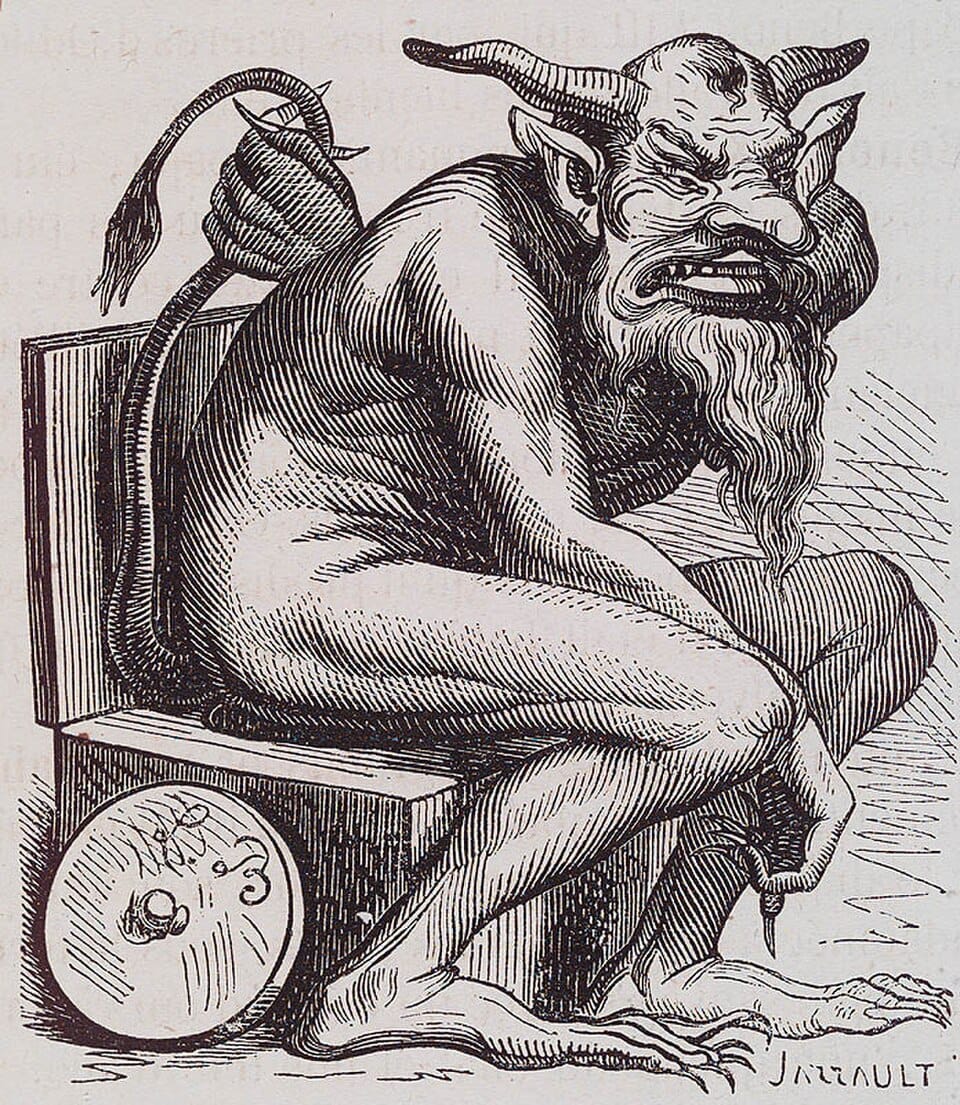
I am from Cologne. But my parents originally came from northern Nigeria and with them came another way of understanding what a house contained. The unseen did not require an abandoned building, a ruined graveyard, or any of the gothic machinery through which Western stories so often announce the supernatural. It could be domestic. A doorway. A toilet. A hollow tree. The room you entered every morning half asleep.
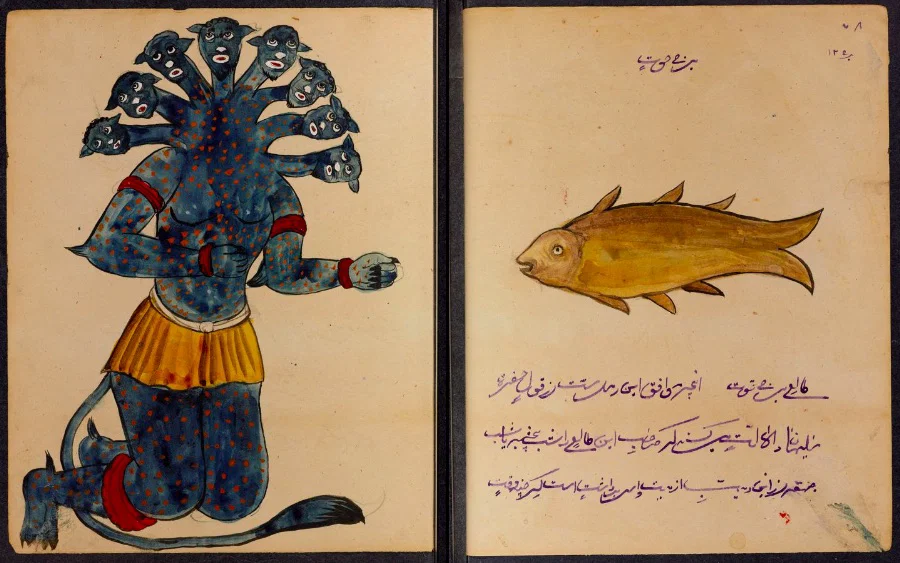
The jinn were not always terrifying. Sometimes they were simply bad housemates. When keys disappeared from where we knew we had left them or some small object turned up somewhere impossible, the unseen became suspect again. Someone might accuse the jinn. Sometimes we blamed the Heinzelmännchen instead. The categories were porous when I was a child. What mattered was that an invisible someone could be responsible.
Cologne offered its own invisible inhabitants. The Heinzelmännchen are said to have entered Cologne homes at night and completed the work people had left undone.
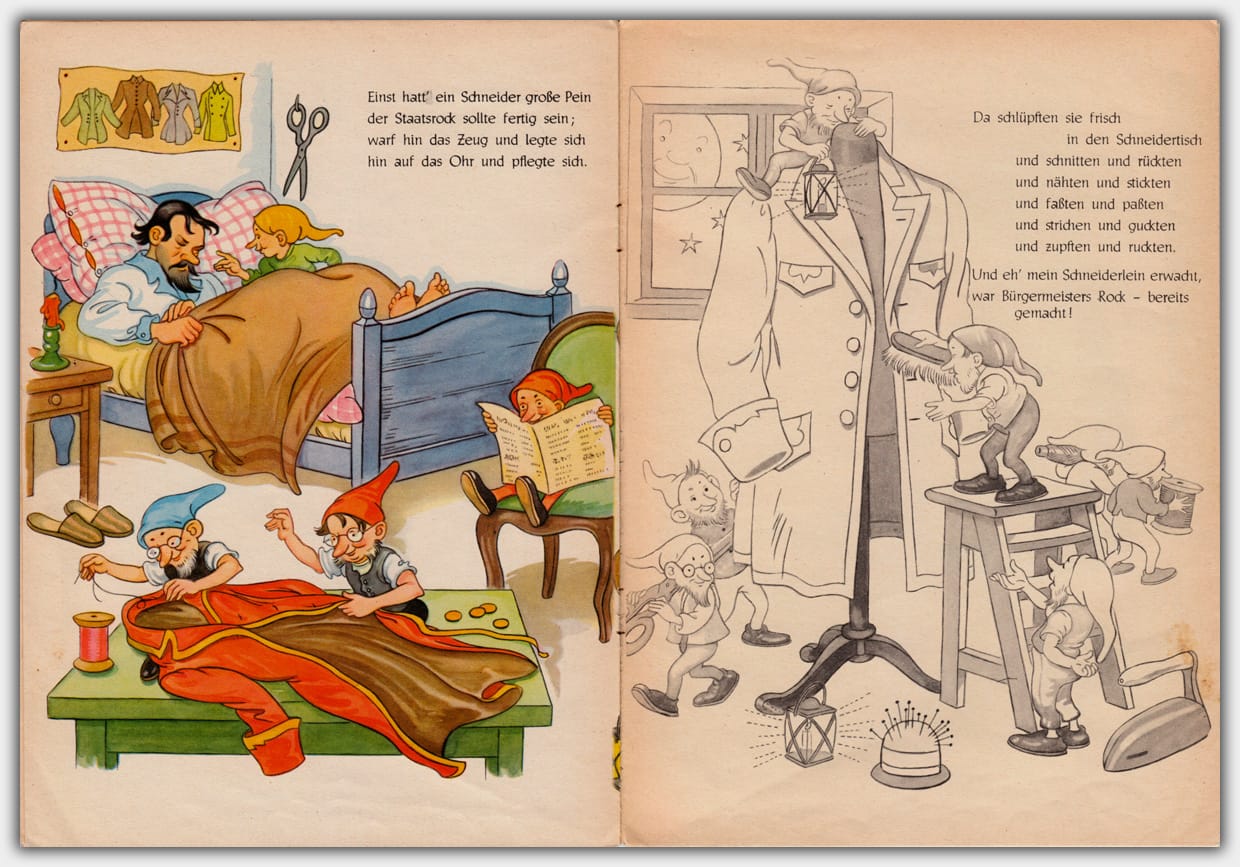
The city itself describes them as Hausgeister: house spirits. They worked only while unseen; once the tailor's curious wife contrived to see them, the story says they disappeared. As a child they made immediate sense to me. Adult me wants to separate everything properly: German folklore here, Qur'anic cosmology there, Hausa spirit traditions somewhere else.
The Islamic universe I inherited was populated by more than humans. In Surah al-Rahman, the Qur'an places two kinds of creation almost side by side:
خَلَقَ الْإِنسَانَ مِن صَلْصَالٍ كَالْفَخَّارِ
وَخَلَقَ الْجَانَّ مِن مَّارِجٍ مِّن نَّارٍ
Humankind from clay like pottery; the jinn from a flame of smokeless fire. In Surah al-Ahqaf, a group of Jinn hears the Qur'an and returns to its own people as warners. In Surah al-Jinn, they speak in the first-person plural:
وَأَنَّا مِنَّا الصَّالِحُونَ وَمِنَّا دُونَ ذَٰلِكَ
Among us are the righteous, and among us are those who are otherwise.
And later:
وَأَنَّا مِنَّا الْمُسْلِمُونَ وَمِنَّا الْقَاسِطُونَ
Among us are those who submit to God, and among us are those who deviate.
The striking word is among. The Qur'an gives them difference within themselves: factions, dispositions, and moral agency.
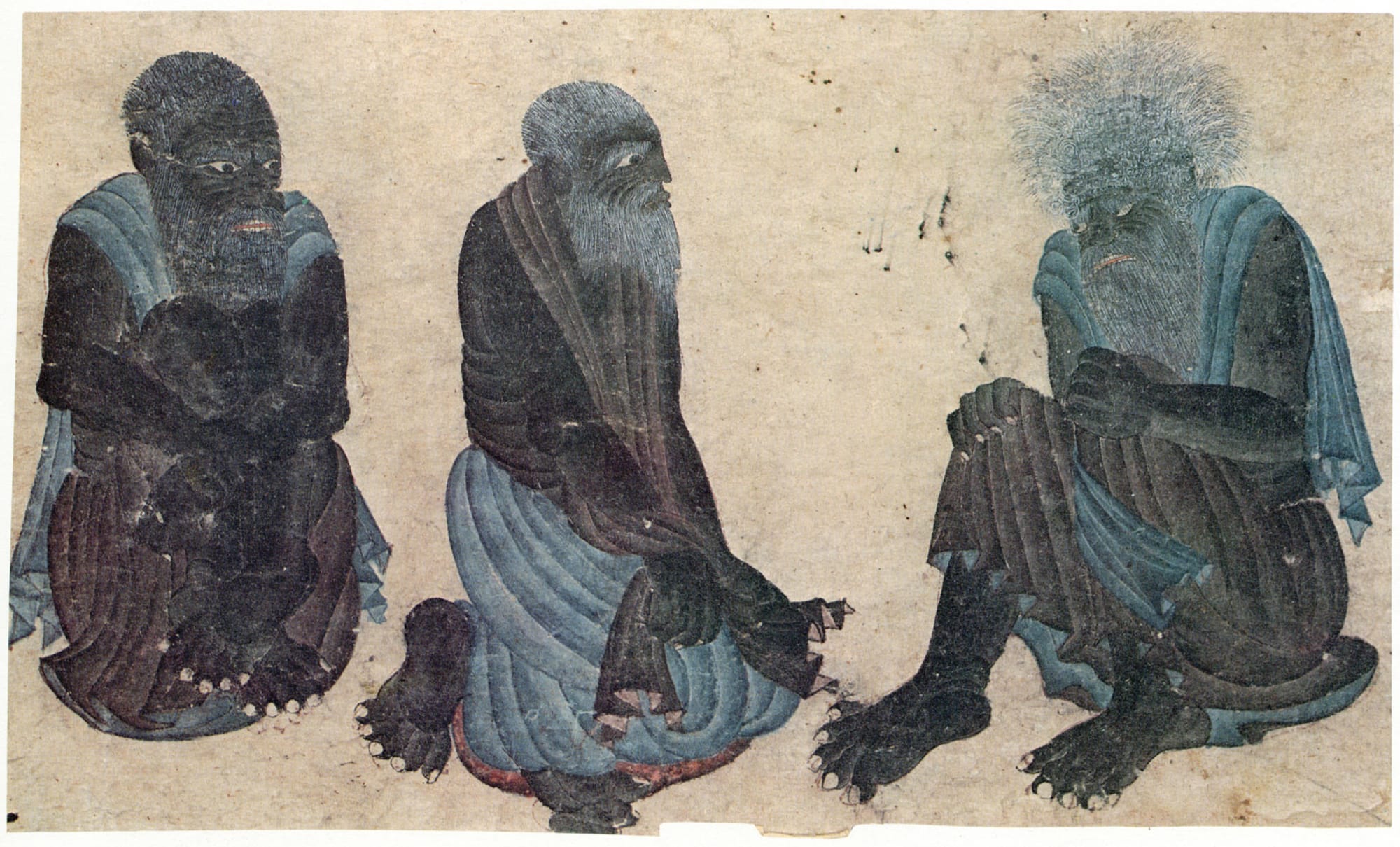
In the supernatural world of my childhood invisibility was not the same as absence. Arabic itself seems to circle this idea of concealment. Classical Arab lexicographers connected جِنّ - jinn with the root j-n-n, associated with something hidden from ordinary sight.
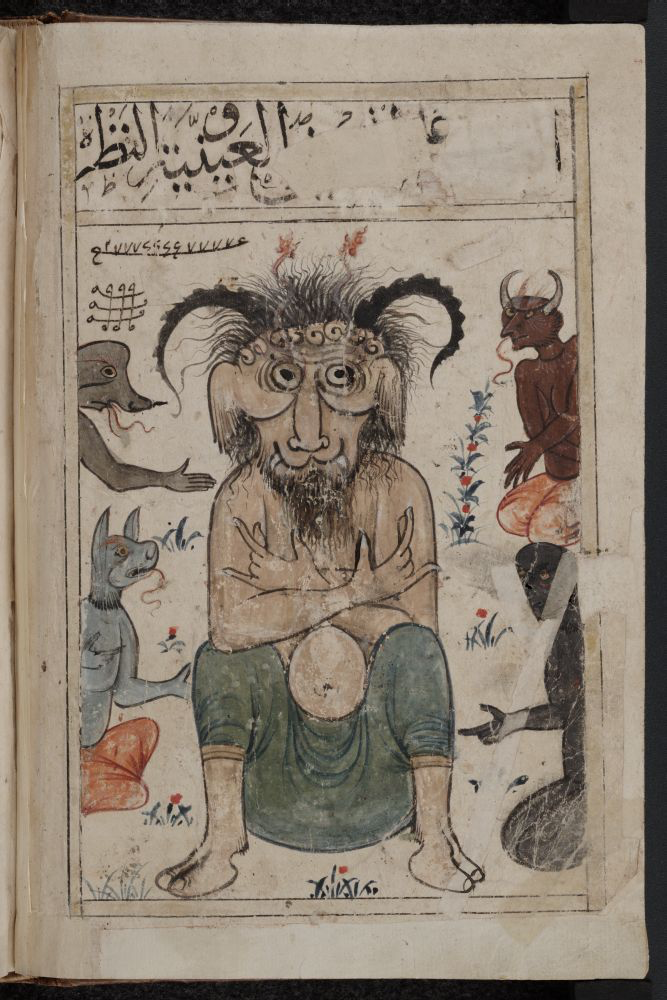
In the Hausa tradition, however, I knew jinn as aljanu as: the same invisible beings described in the Qur'an. Like human beings, they have choices, communities and lives of their own.
But Hausaland had stories about spirits long before the word aljanu was used. Those spirits are often called iskoki. They belong to the spiritual world associated with Bori, a Hausa religious tradition found especially in northern Nigeria and Niger. Bori is concerned with relationships between people and spirits, ritual and possession. Its spirits have names and personalities. Some belong to families or ranks. Some behave like rulers, scholars or soldiers. The invisible world resembles a society.
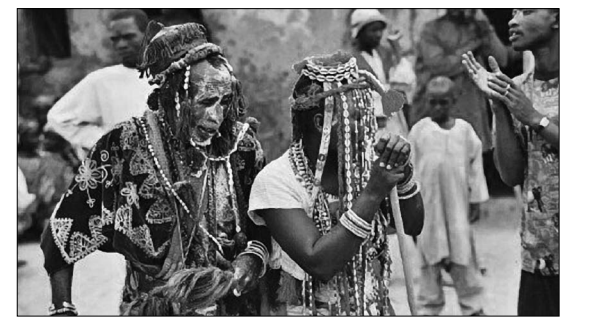
Islam did not simply arrive and make that world disappear. For centuries, Bori and Islam have existed beside one another: sometimes in conflict, sometimes borrowing language from one another. Over time, the Qur'anic idea of jinn entered Hausa speech as aljanu, while iskoki continued to belong to older Hausa ways of speaking about spirits.
So aljanu and iskoki are not simply two words for exactly the same thing. Their borders can blur. That is the world I inherited as a child, a layererd understanding of reality. Qur'anic jinn, Hausa spirits, family warnings and stories all occupying the same house.
In the Bori tradition, the spirit world occupies a tangible address. It is called Jangare, an invisible city inhabited by iskoki and meticulously constructed with its own neighborhoods and homes. For the Bori, human illness or misfortune reflects a spatial intrusion, a sign that a spirit has crossed a threshold to occupy a human body. Healing becomes a negotiation of shared tenancy. Long before diaspora scatters us across physical borders, we live in constant negotiation with an unseen layer inside our homes where the spirits reside.
What survives when one invisible world is translated into another?
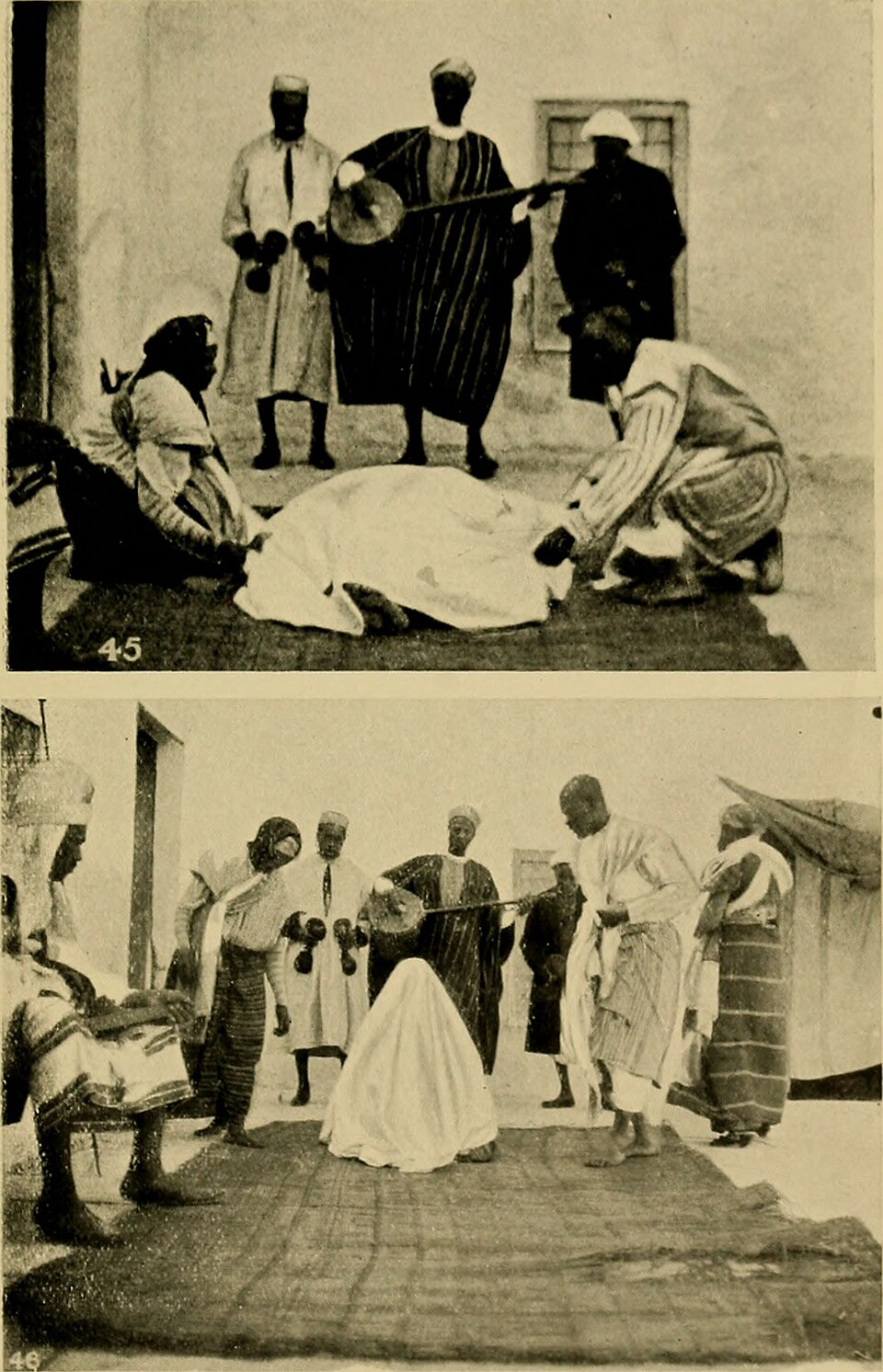
My siblings and I used to ride our bicycles through the Fritz-Encke-Volkspark trying to find its end.
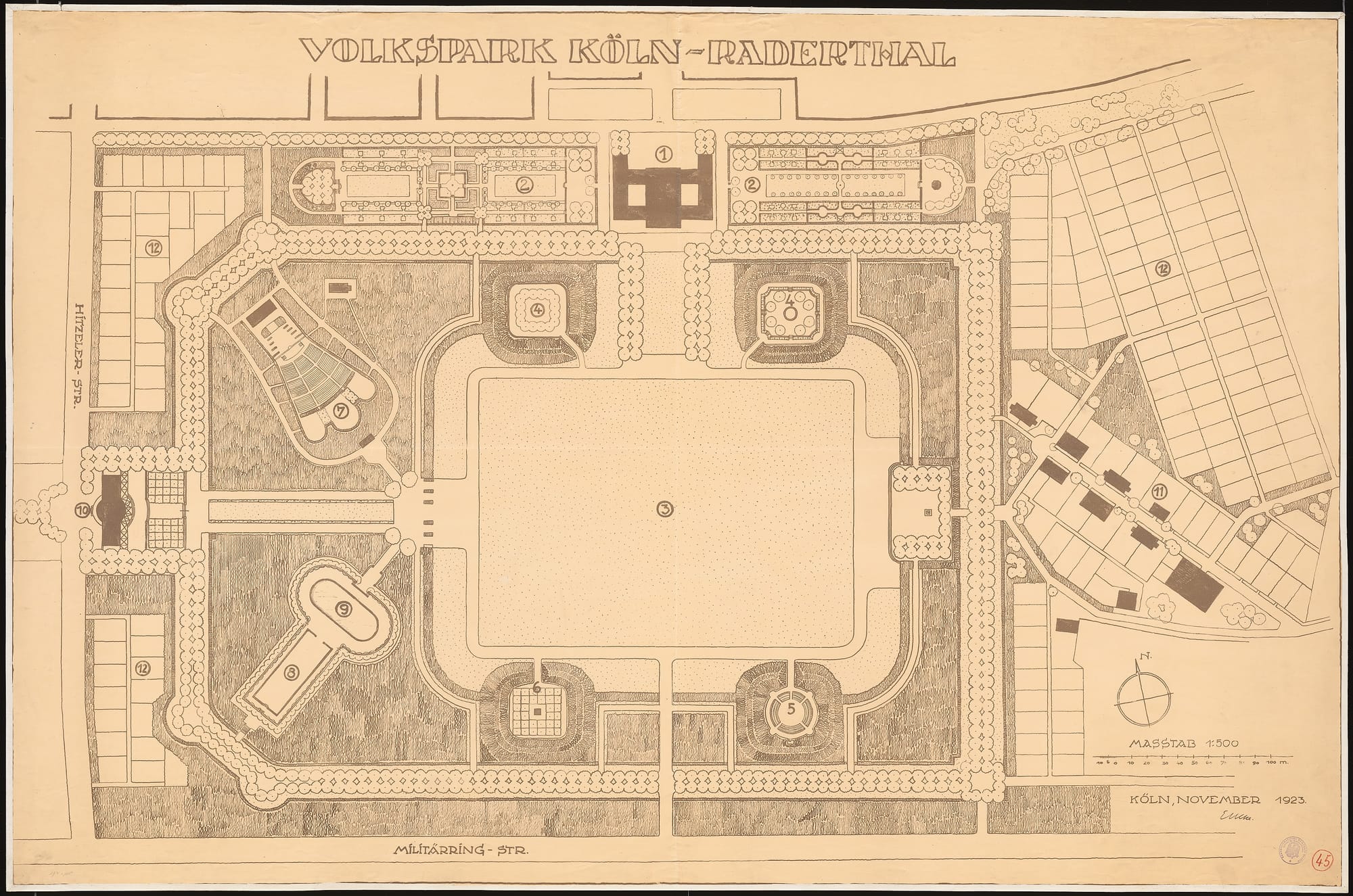
The pathways stretched onward indefinitely. Inside it stood the Brunnentempel, a circular pavilion with a domed roof and a fountain at its centre. I remember the fountain temple specifically as a crossing. You passed beneath the dome and emerged again into green, as if the building existed only to deliver you from one version of the world into another.
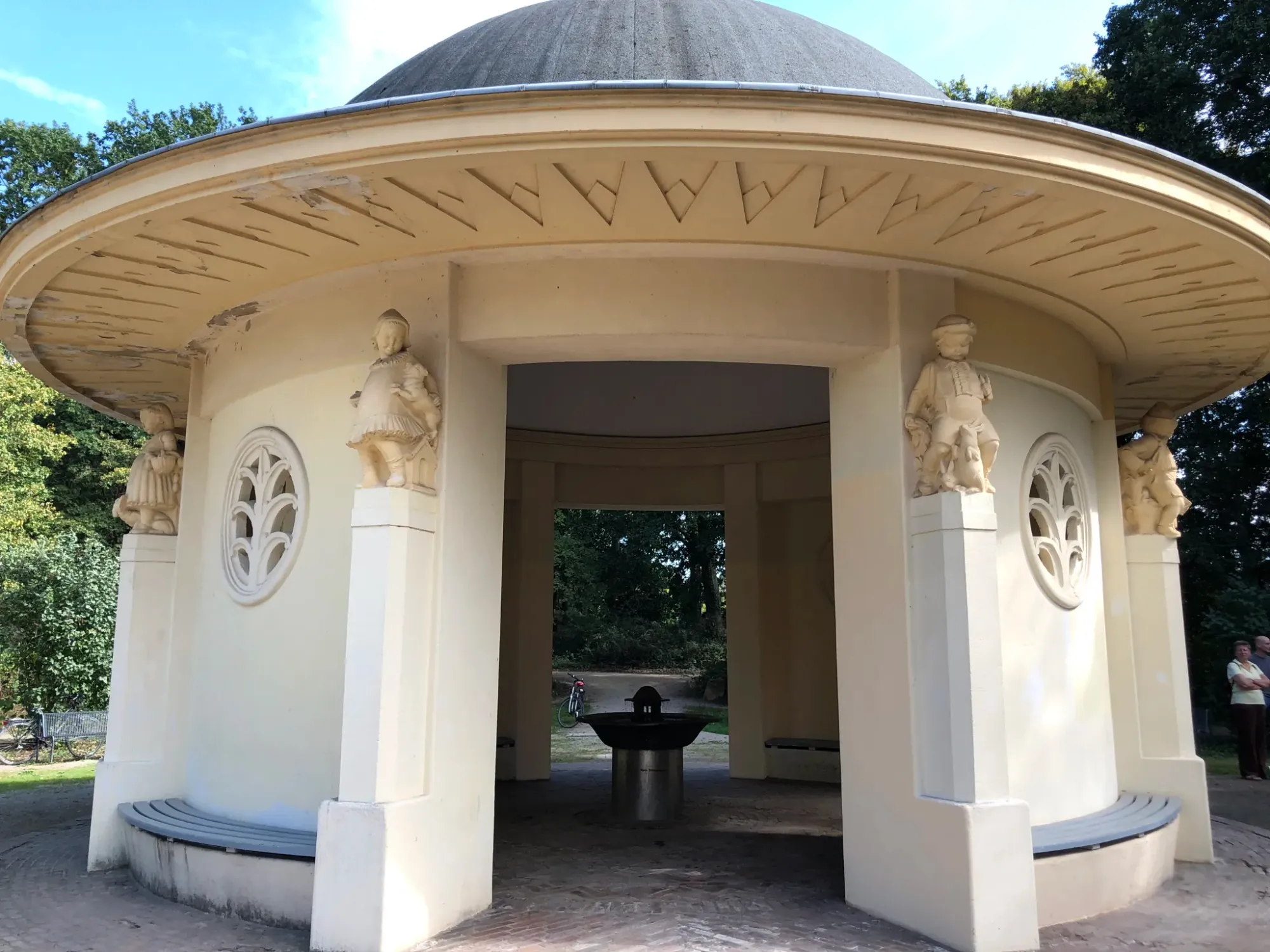
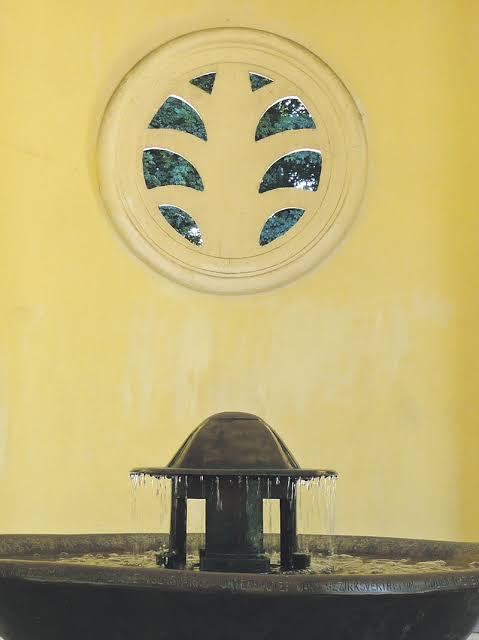
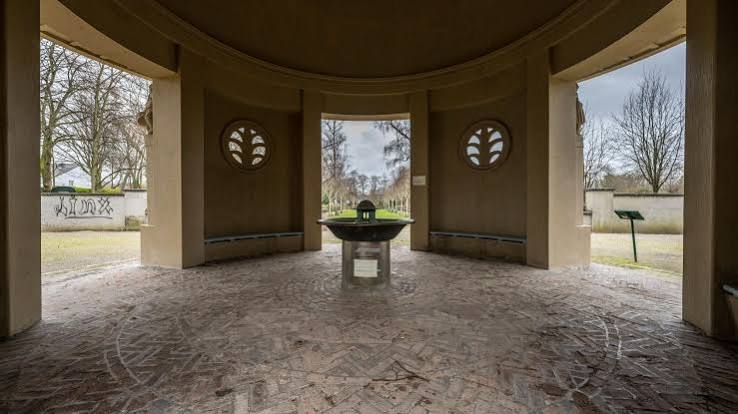
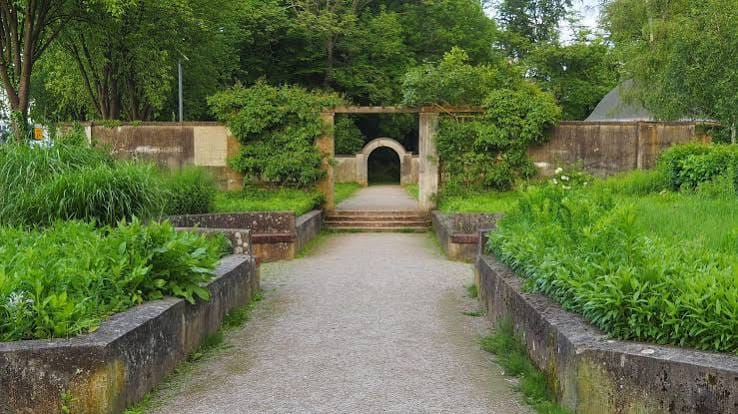
The 1920s Fountain Temple (Brunnentempel) in Fritz-Encke-Volkspark, Cologne, Germany
I learned much later that the park sits in Cologne's Grünzug Süd, connecting the Inner and Outer Green Belts. There really was always somewhere else to go.
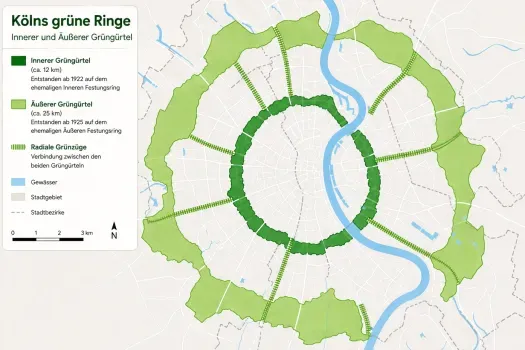
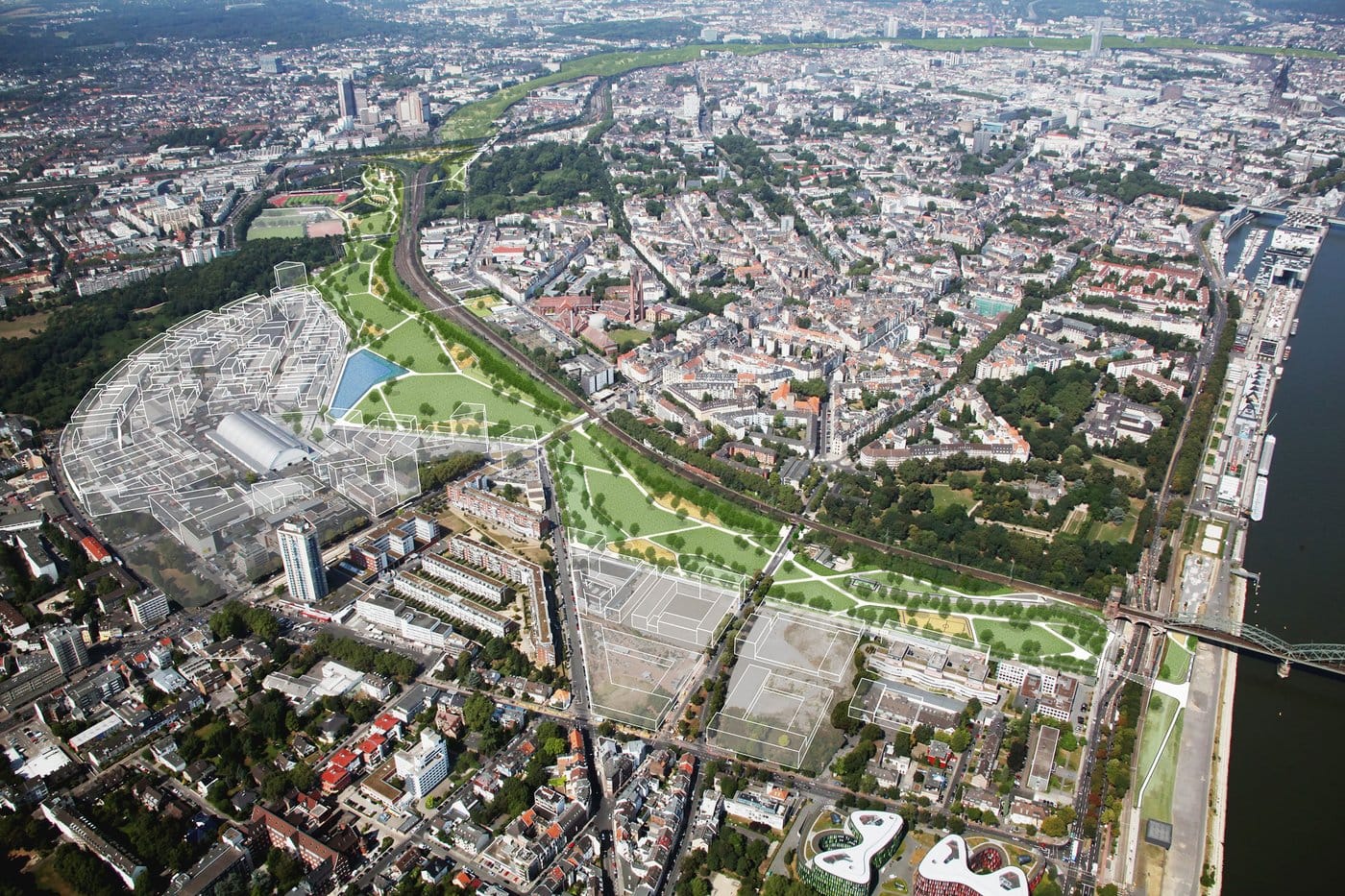
The Cologne Green Belt (Grüngürtel) is a massive semicircular park and recreation system spanning both sides of the river Rhine, originally conceived in the 1920s by then-mayor Konrad Adenauer on the grounds of 19th-century Prussian fortifications.
There were trees with hollows in their trunks, dark cavities large enough for a child to imagine another room inside them. We received warnings to avoid specific locations after dark. The aljanu frequented such places, according to the adults. We were told to leave them alone and to respect their peace, under threat of madness.
There were neighbourhood children who played there anyway. We watched them with a child's absolute confidence about dangers hidden from other eyes. We assumed the aljanu had touched them.
I hear that sentence differently now. What did we mean by touched?
Some adults from our community interpreted specific behavioral deviations as definitive evidence of a spirit's touch. They watched for sudden, unexplained silence or intense bouts of unprovoked aggression. They noted when a person began wandering aimlessly away from home. They paid close attention to speech that scrambled regular comprehension and the sudden neglect of the physical body.
This collective act of mapping thresholds remains deeply fascinating to me. In particular, I am drawn to how a community establishes its boundaries, collectively deciding the exact moment a jinn has crossed the perimeter to claim tenancy inside a human body.
Yet local understandings of mental distress are far more complex than simple superstition. In Northern Nigeria, families routinely navigate biomedical treatments alongside spiritual explanations, viewing illness through overlapping lenses of substance misuse, psychological trauma, and jinn possesion. To be "touched" by a jinn is not always a permanent condemnation; often, religious framework transforms suffering into a temporary trial through which faith provides profound meaning.
The same language could wound and console. I return to the children beside the hollow trees. When we wondered whether the aljanu had touched someone, were we giving strangeness a story? Were we making fear intelligible? Were we turning distress into cosmology? Were we taught to make those children frightening?
Perhaps this projection served a deliberate purpose. Fear operates effectively as a social boundary. By rendering those children frightening to ourselves, the community established a stark deterrent, a psychological fence constructed around the places and behaviors we were meant to avoid. The supernatural label functioned as a protective quarantine, preserving the safety of the collective by casting the vulnerable as a warning.
This collective complexity explains my resistance to clean categories. My childhood aljanu carried the Qur'an, the Hausa language, and specific family interpretations. They thrived inside jokes, fueled active fears, and preserved fragments of older cosmologies. They contained everything my parents inherited and passed down without a need for formal cataloging. Belief arrived already layered.
In Niger ethnographic accounts of spirit possession among schoolgirls reveal that spirits often claim to be driven mad by the destruction of their own habitats—furious that ancient trees were felled to construct modern classrooms. The institutions built to manifest a new future became haunted by the exact history their construction was supposed to displace. This idea returns me immediately to those trees in Cologne. A cosmology possesses the power to migrate. It crosses borders inside the people who inherit it, then fastens itself securely to unfamiliar landscapes.
An architect draws the places a body can enter. In the spiritual life I inherited, a threshold is an action: a word spoken, a silence kept. Hausa and Islamic domestic practices remain full of such thresholds, transforming the ordinary acts of entering and eating into spiritually marked moments.
In my childhood, the threshold word was often:
بِسْمِ اللهِ
Bismillah, In the name of God.
What those teachings gave me as a child was an etiquette of limits:
- Know that night can change the terms of a place.
The cosmology I inherited did not require me to spend every moment terrified of unseen beings. Its more durable demand was attentiveness:
- You are not the only kind of creature in existence, therefore do not confuse an empty-looking room with an empty universe.
That lesson has followed me into a very different kind of house. There is the refrigerator's electrical hum. Pipes ticking inside the walls. Wi-Fi signals moving through rooms. Bluetooth devices searching for one another in the dark. Phones waiting for a wake word. Sensors recognizing movement. Systems learning when people are home, when they sleep, what they watch, what they buy.
The story modernity likes to tell about itself is a story of disenchantment. And yet humans have filled their homes with invisible agents of our own making. Modernity dismisses my inherited worldview as superstition because it imagines unseen intelligences sharing domestic space, then build homes wired with systems we cannot see that listen, answer questions, infer habits and anticipate movement.
These are radically different accounts of invisible presence. I keep returning to one question:
Why does invisible agency sound absurd to modernity until technology manufactures it?
What interests me is what each invisible world asks of the human being living inside it. The unseen world I inherited came with etiquette. It begins from an understanding of reality where :
- you are not the only presence here.Therefore do not behave as though everything belongs to you.
- Respect thresholds.
- Leave certain places undisturbed.
Its most important lesson, at least as I carry it now, is humility.
The smart house offers another arrangement. You are not alone here either, but the invisible presence is constantly listening, recording, predicting, translating the intimate rhythms of home into information.
Sometimes, when I put my key into my door, I think of Cologne's Hausgeister. Of wireless signals passing through the wall. Of the childhood house whose floor plan continues all the way to a hollow tree in a park whose ending I could never find.
I think, too, of how absurd the final line on any floor plan really is.
HOME ENDS HERE.
Childhood taught me otherwise.
Perhaps home is not the place where we are alone.
Perhaps it is not even the place that belongs to us.
Perhaps home is the first place where we learn the limits of our sovereignty.
I open the door.
I say:
بِسْمِ اللهِ
Bismillah.
I enter as though somebody is already there.