Raw Earth & Living Tablescapes: Notes from the Inaugural Eames Residency
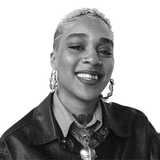

Last June (2025) I was in Havana, Cuba for a Lucumi ceremony and celebration. For the two months prior my mind had been swirling with reflections and realizations about this moment in time. All at once, I had closed on Issue two of the Land Food and Freedom Journal as lead illustrator of Àrokò Cooperative, had begun a relationship with Booker T Washington Community Service Center as a visiting clay teacher, and was working my way through the inaugural Eames Ranch Residency.
My proposal for this residency was to explore the kitchen by examining its tools, rituals, and associated objects. The kitchen is a rich arena for history and meaning across cultures, and within the African diaspora–similar to spiritual spaces–it sheds light on the throughlines that connect time and geographic location. I was particularly focused on both pulling in existing considerations and stretching my practice in new directions, including learning to forage and process natural clay, and mixing my own clay body.
The residency itself became an ideal setting for this inquiry. The Ranch Studios Artist Residency is an invitation-only program that welcomes artists to explore new ideas at the Eames Ranch in Petaluma, CA. I was asked to participate in the inaugural three-month sessions in the spring of 2025. The residency brought together a small cohort of artists who transformed the Ranch’s barn and farmstead buildings into studios for experimentation, discovery, and play.
Part of the program included access to the Eames Archives and invited close engagement with the pioneering work of Ray and Charles Eames, offering fresh perspectives on problem-solving, design thinking, and collaboration.
Spending time on the land while the Eames Institute built out aspects of the ranch allowed for insight into land management, regenerative agriculture, and local environmental conditions, enabling ecological awareness to be directly integrated into designs and artworks.
I also found resonance with the Eames Design Diagram which feels deeply aligned with Aroko’s way of moving through the world.
My project remained largely consistent with my original proposal; but, my interest and engagement in what I have been exploring has inspired me to greatly expand the scope of my exploration of the kitchen. I found that I really enjoyed spending time with the material (processing, recycling, and mixing) as I moved from a raw material to being ready to be shaped and built into something functional. I found particular inspiration in Ray’s naming of a set table as a “tablescape,” likening it to the way an altar is meant to be a living, beautiful place for reverence, honor, and homage.
I enjoyed many conversations with my co-residents, several of whom have brought valuable experience in production ceramics, clay, and glaze chemistry. I look forward to implementing their insights as I continue my experiments with this kitchen project. For example, early on I built a “souvenir” size coalpot typically found in St. Lucia and had conversations with Jay and Rie (Dion Ceramics) about how I might more efficiently approach the production of fifty souvenirs.
I completed the first phase of my inquiry with the kitchen and kitchenware. I built two coalpot prototypes with slightly different clay compositions using between 50 and70 percent of the natural clay from the Eames Ranch combined with my commercial Red Velvet clay. I also began constructing the elements of my imagined kitchen starting with hand-built tableware, altar vessels, tiles, and sketches. Through these pieces, I have played with color and texture.
While my project is very much in line with my existing practice of working with ancestral modalities (coil-building), learning to forage and process clay pushed me deeper into understanding and practicing the full lifecycle of my craft. This work drew on Ray and Charles’ philosophy around innovation, embracing their belief that "[innovation] was only a means to an end, not an end in itself." My preliminary outcomes do not deviate far from the existing designs of the traditional coalpot. The exercise of building this new form, as well as working with a new clay body at a much larger size, has offered some learnings around my process.
One of the many “firsts” in this project was doing a pit fire at the beach. I gathered my chosen family to join me at Ocean beach where we constructed and tended to a fire over the course of five hours. I am a learner through doing, and I look forward to additional experimentation with pit firing.
Both of my coal pots experienced some cracking and breakage. I had a large jar that “failed” during the drying process. My large jar form was ambitious and further complicated by my inability to monitor my piece through the drying process. I believe that moisture, the weight of the piece, and its sharper plane changes contributed to its challenges, and I plan to remake the piece utilizing a different strategy for building while monitoring the piece diligently through its finishing stages.
This three-month period highlighted the intersections of my work. Things that I had identified early after stepping away from my corporate work and establishing what I wanted my art practice to be. When I look back at my dream notebooks from the end of 2020, I scribbled notes and diagrams about my desire to learn about Afro indigenous practices, develop my relationship with clay, do value-aligned work with value-aligned businesses, and eventually share my findings with others. Five years later, I find myself living the very life I imagined in those notebooks.My lived experience had finally caught up with my dream journal.