"Nigerian Wicked" is the Nollywood Movie We Desperately Need
From Genevieve Nnaji to Aki and Pawpaw, Nollywood shaped generations of childhoods in Africa and the Diaspora. Now Cynthia Erivo's gloriously unhinged Wicked parody reminds us why its wildest era deserves a comeback.

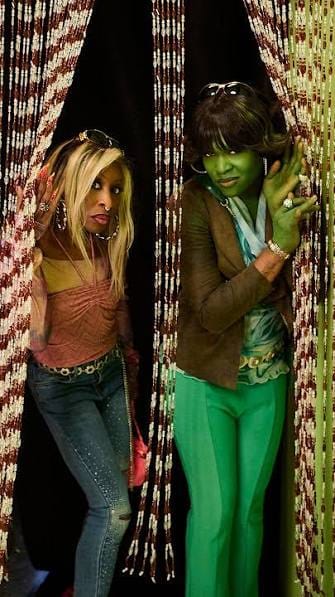
I have watched Nigerian Wicked more times than I care to admit. Every time I think I've exhausted its absurdity, something else catches my attention. The wigs. That slap. The sheer audacity of a witch requesting a Brazilian Butt Lift that defies gravity from a Wizard who cannot even afford an authentic luxury watch.
By the time the sketch ended, I had one thought: somebody needs to fund this, immediately. Give me the full Nollywood treatment. The prolonged reaction shots. Special effects that look as though they were assembled during a power outage. A narrator who announces the obvious with the gravity of a biblical prophecy. I want all of it.
Perhaps my enthusiasm has something to do with nostalgia.
Growing up in Germany, Nollywood arrived in our home on DVDs, often burned copies brought back by my mother or family friends returning from Nigeria. Those stories travelled farther than their makers could possibly have imagined. They reached children growing up thousands of kilometres away, carrying with them the sounds of Nigerian homes and the peculiar logic of a world in which anything could happen. Those discs were precious cargo. Through them, we followed the careers of actors whose faces became familiar. Who didn't know Genevieve Nnaji? Or Patience Ozokwor's stellar performance in Submission (2002)? And Aki and Pawpaw, the wonderfully mischievous duo played by Chinedu Ikedieze and Osita Iheme? I still remember the glorious nonsense of Baby Police.
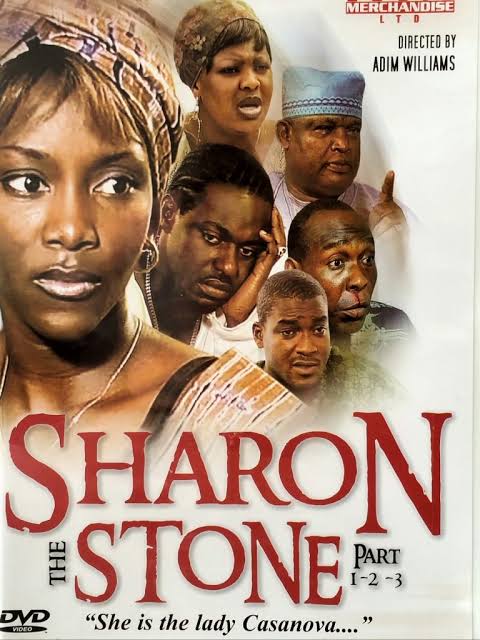
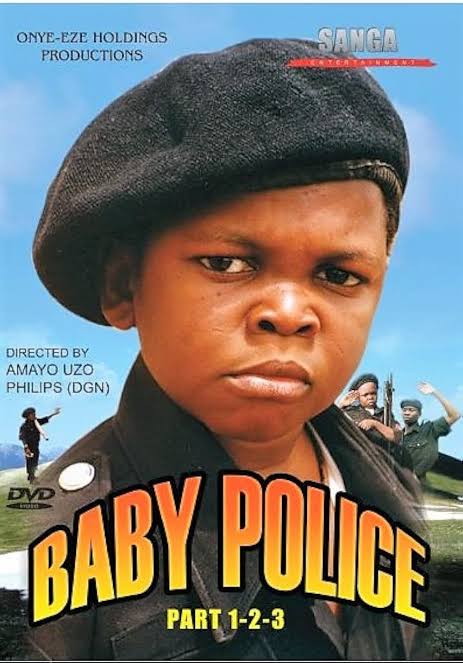
The films connected us to a Nigeria that existed beyond the Germany I knew. They offered a window into everyday life, albeit one where the everyday could become spectacularly strange without warning. A jealous relative might secretly be a witch or an ordinary household could conceal a terrible curse. Money was rarely just money, particularly when somebody had acquired far too much of it far too quickly.
Now, years later, a Nigerian-inflected parody of one of Hollywood's biggest musicals has travelled in the opposite direction, carrying that same cinematic sensibility onto British television screens and into the phones of millions of viewers worldwide.
Long before I had developed a taste for horror cinema, Nollywood had introduced me to a universe where the supernatural could interrupt domestic life at any moment.
So when Cynthia Erivo appeared as Glinda in Saturday Night Live UK's Nigerian Wicked, something in me immediately recognized the world being recreated. Written by comedian Ayoade Bamgboye and directed by Will Farell, the sketch takes the familiar universe of Wicked and transports it into the exuberant visual language of early-2000s Nollywood. Erivo, who plays Elphaba in the Hollywood adaptation, crosses to the other side of the Yellow Brick Road. This time, she is Glinda, a blonde-wigged, social climber with the temperament of a Nollywood villainess. Bamgboye's Elphaba, meanwhile, has rather more immediate concerns than the persecution of witches. She wants a BBL.
Their destination is LagOz, where the Emerald City has acquired the colors of the Nigerian flag and the great Wizard's authority is undermined by a Rolex that turns out to be a No-Lex. What fascinates me, though, is how effortlessly the original story slips into its Nigerian incarnation.
The Peculiar Genius of a Nigerian Witch
Anyone who grew up watching Nigerian films will recognize the world Nigerian Wicked inhabits. In Karishika (1996), a beautiful young woman becomes an agent of the underworld, luring unsuspecting men towards spiritual ruin. In Living Bondage (1992), Andy Okeke sacrifices his wife for wealth, only to find himself haunted by the consequences. Nnneka the Pretty Serpent (1994) gave us a beautiful woman whose connection to a serpentine spirit made seduction a supernatural threat. And in End of the Wicked (1999), the greatest danger came from within the family itself, as witchcraft turned the domestic sphere into a battlefield between the living and other non-human entities. These films could be terrifying. Then, without warning, something so outrageous would happen that the entire room would erupt into laughter.
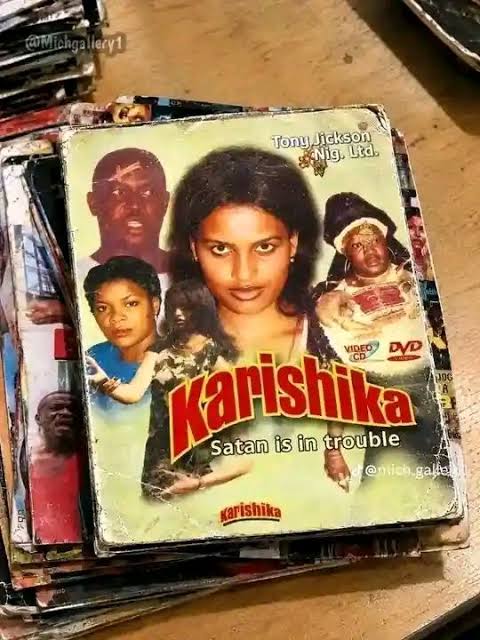
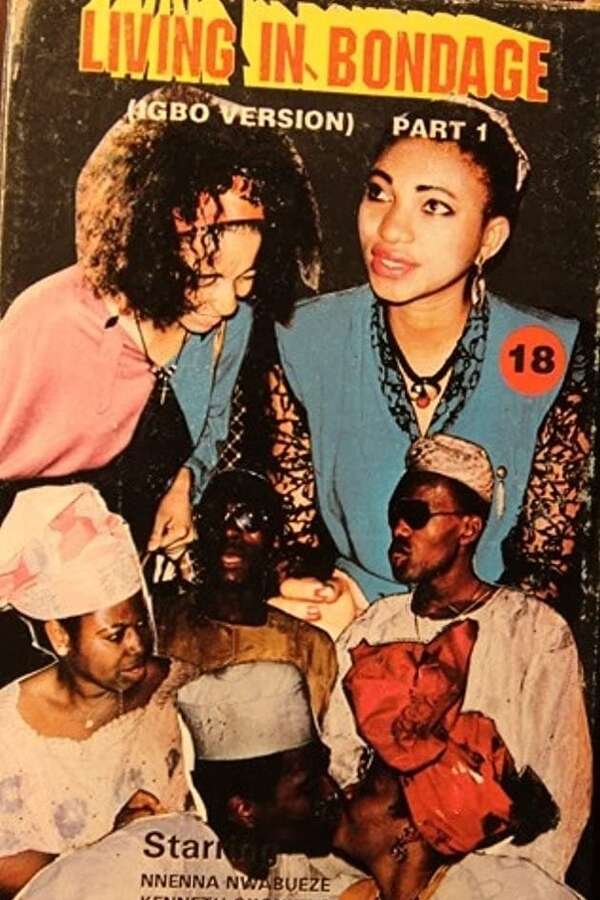
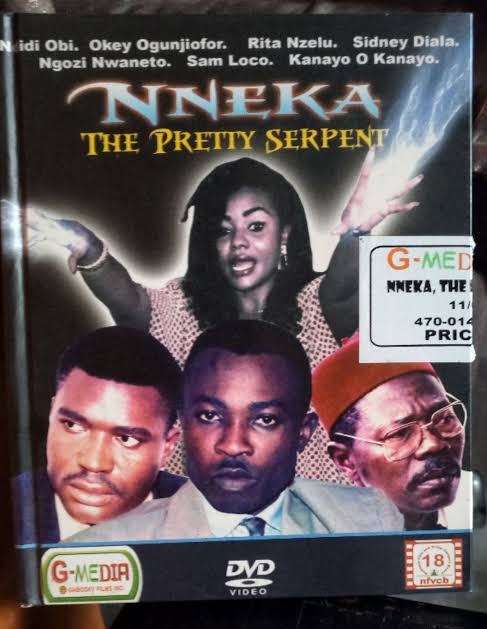
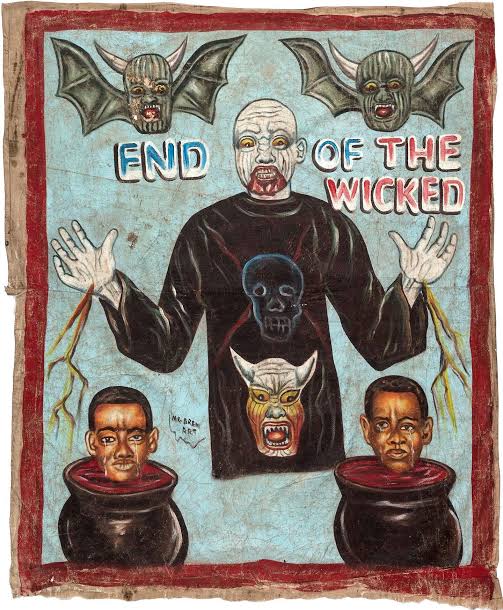
Film scholar Jonathan Haynes, when writing about the supernatural imagination of Nigerian cinema, observes that its popularity owes much to the representation of a universe with an "imminent spiritual dimension." In these films, the unseen world was intimately entangled with the visible one. Early Nollywood understood the frightening possibilities of ambition. Its monsters emerged from the same social conditions that shaped audiences' lives. A sudden fortune might suggest supernatural dealings. The successful businessman could be hiding a dreadful secret. Even the family home, supposedly a place of refuge, could harbor enemies.
The spirit world gave form to anxieties already deeply rooted in Nigerian everyday life. And because the budgets were often inadequate to the filmmakers' ambition, imagination had to do much of the heavy lifting. A thunderclap could announce divine intervention. A cheap visual effect could transform a woman into a demon. I find the frequent dismissal of this aesthetic as simply bad filmmaking rather reductive. Those films developed their own contracts with audiences. They borrowed from popular theatre and oral storytelling, embracing melodrama to make social conflicts visible. Emotions were expressed at full volume and moral consequences arrived with supernatural force. Nigerian Wicked understands the pleasures of that cinematic language. Its creators have recreated a world in which technical limitations rarely restrained the appetite for spectacle. Old Nollywood had the confidence to imagine absolutely anything.
The Wizard has no Money
My favourite joke may be the Wizard himself. Here is a man who has built his reputation on extraordinary power. People travel great distances to seek his assistance. He presides over a magical kingdom, presumably surrounded by the symbols of his authority.
But the man is broke. His Rolex is a No-Lex. I laughed because the joke is so Nigerian it almost hurts. There is a particular kind of public figure whose entire existence depends upon the appearance of wealth. He has the expensive clothes and the appropriate mannerisms. He knows which names to mention in conversation. He may even have a title, preferably one that suggests proximity to royalty. The Wizard belongs to this tradition of magnificent impostors. His authority survives because other people continue to believe in it. The costume must never slip. The illusion must be maintained. Of course, this is already part of the original Wizard of Oz. The supposedly omnipotent ruler is revealed to be an ordinary man manipulating appearances. Relocating that revelation to a Nigerian setting, however, gives it a deliciously familiar flavour.
And what do the women want from this supposedly omnipotent figure? Glinda wants a Birkin bag. Elphaba wants a skinny BBL. The magical quest has become a shopping trip. Who better to sell them that fantasy than a man whose own success is counterfeit?
Oz belongs to LagOz
There is another reason I find the sketch so satisfying. Cynthia Erivo is a British actress of Nigerian heritage playing a character from an American musical, now reimagined through the conventions of Nigerian popular cinema on British television. The cultural journey is fascinating.
And audiences have responded. Since its release, Nigerian Wicked has amassed more than 10 million views on YouTube alone, becoming the most-watched clip in SNL UK's history.
We are accustomed to seeing African stories translated for Western audiences, often with the assumption that their success depends upon making them more accessible. Cultural references are explained and unfamiliar conventions are reshaped to fit the expectations of international viewers. Nigerian Wicked reverses that movement. It takes one of Hollywood's most recognisable fantasy properties and subjects it to a completely different storytelling sensibility. I love that reversal. There is a freedom in the sketch's willingness to be ridiculous.
Please Make the Movie
I want Nigerian Wicked to become a feature because its premise contains a whole world waiting to be explored. Imagine LagOz as a magical city governed by the same contradictions that animate so much Nigerian popular culture. A place where wealth can be conjured but never trusted and where the most powerful man in the kingdom is terrified that somebody might discover he is living beyond his means.
So yes, give me Nigerian Wicked on the big screen. I want to sit in a cinema and feel the same excitement I felt when a relative arrived in Germany carrying a fresh stack of Nollywood DVDs. The anticipation of entering a world whose rules I understood instinctively, even when the story itself made absolutely no sense.
Only this time, I want the whole world watching with us.