Building a Home for Spoken Word: An Interview with Kym Dominique-Ferguson
In conversation with ÀROKÒ.WORLD, Kym Dominique-Ferguson reflects on identity, the roots of his work, and the responsibility he feels toward the artists who come after him.
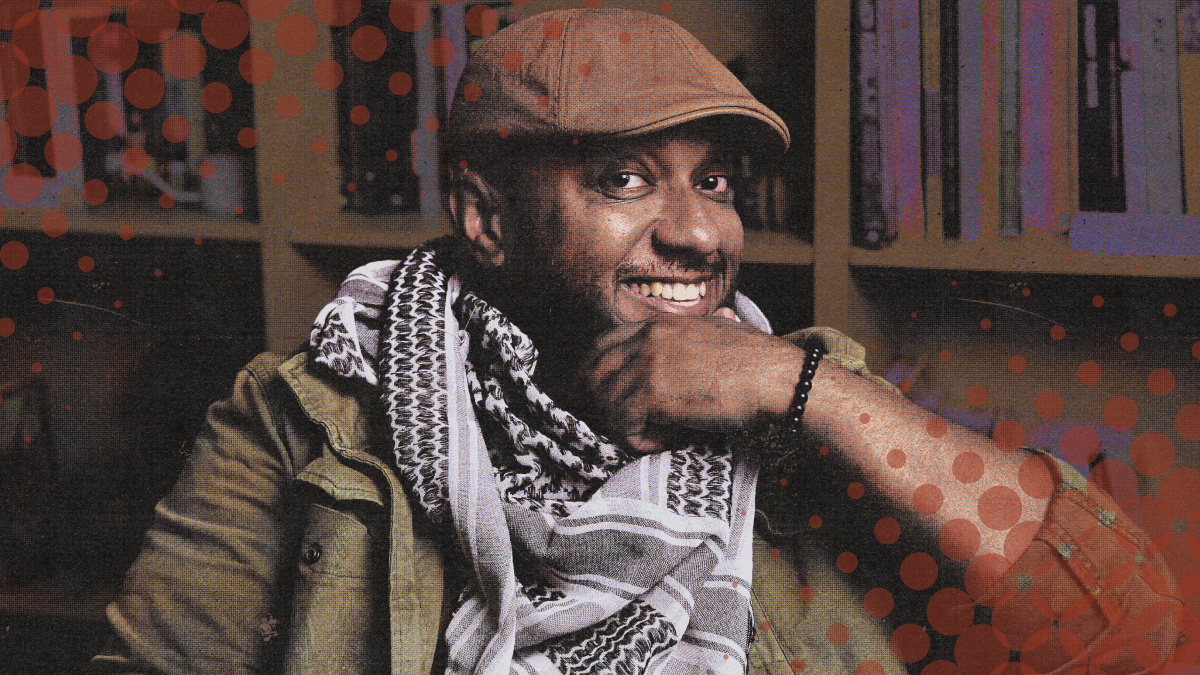
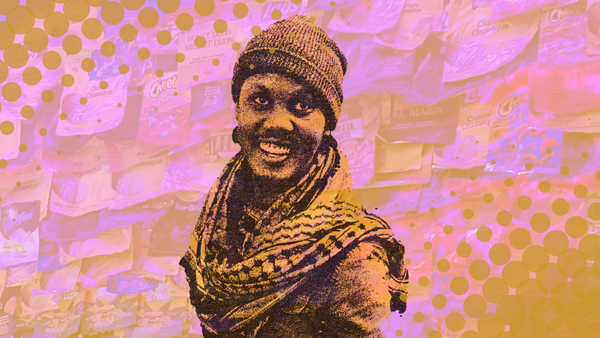
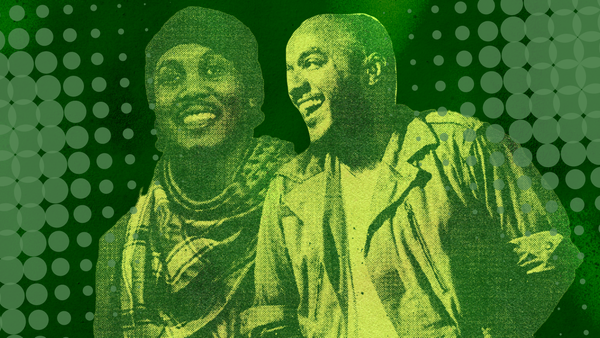
In Montréal’s spoken word scene, Kym Dominique-Ferguson has become a steady presence, shaping Montréal’s spoken word ecosystem. A spoken word performer, theater artist, and founder of Madpoetix Productions, Kym has spent more than two decades building spaces where poets, especially emerging ones, can perform, experiment, and grow. Through open mics, workshops, and live interviews with artists, his work has centered on one idea: that art is a form of community infrastructure.
IDENTITY
AISHATU: When someone asks who you are, how do you usually answer?
KYM: That’s always a loaded question. Identity can be approached from so many angles.
Recently, I discovered something fascinating through a DNA test. It turns out I’m connected to a Moroccan king from the 1700s who sent his son to Jamaica in search of a relative who had been captured. I also discovered Nigerian ancestry, which resonated deeply with me because I’ve long felt a connection to Yoruba culture and the Orishas.
But if we simplify it, I usually say I’m a Jamhaitianadian, a Jamaican, Haitian, and Canadian.
My father is Jamaican, my mother is Haitian, and I was born in Canada. I spent a lot of my youth in Jamaica, so those roots run very deep for me. Haiti is also an important part of who I am.
Artistically, I like to say I’m a spoken word artist by design, a theater artist by training, and a hustler by necessity.
That probably sums it up.
I’m a multi-hyphenate artist. My focus is live performance and writing. I always say I’m a spoken word artist by design—not because I deliberately chose it, but because it’s something that happened naturally.
I’m also a theater artist by training. I studied theater and cinema for almost ten years. Those experiences shaped how I approach performance and storytelling.
But the simplest title for me is spoken word artist. I think of spoken word as an umbrella under which all vocal art forms exist. If you consider yourself a theater artist, you fall under spoken word. If you’re a poet, you fall under spoken word. If you’re a singer, you fall under spoken word.
For me, spoken word becomes the global category that connects them all. And because I write and perform my own work, writing and performance always go hand in hand.
MONTRÉAL
AISHATU: Where are you based now, and how does that place show up in your work?
KYM: I’m based in Montréal, also known as Tiohtià:ke, the traditional territory of the Kanien’kehá:ka, or Mohawk people.
I was born here but moved back in 2000 to study. Montréal has this way of keeping people. Once you arrive, it’s hard to leave.
At first, I didn’t feel particularly compelled to write about Montréal. But that changed after I became more involved with the Caribbean student community at Concordia University and started learning about the city’s history of racism.
One of my most prolific offerings to the arts scene was a co-written play called Blackout: The Concordia Computer Riots. It tells the story of the Sir George Williams Affair in 1969, when six Afro-Caribbean students accused a professor of racial discrimination in the way he graded their work.
This wasn’t subjective grading. These were science-based assignments. White students copied their work verbatim and received higher grades, while the Black students failed. The students protested for months. Eventually, tensions exploded, and they occupied the ninth floor of the computer center. Riot police were called in.
That moment became an important starting point for me as a writer in Montréal.
More recently, I’ve been working on my first completed manuscript, tentatively titled Echoes of Anansi. The story reimagines Anansi, the African and Caribbean mythological trickster figure, in a contemporary setting. I wanted to explore what happens when that spirit of mischief, wisdom, and transformation moves through a modern city like Montréal.
For a long time, whenever I read books with Black characters, the stories were almost always set in the United States, even when the authors themselves weren’t American. I wanted to do something different. Montréal rarely appears as the center of those narratives, even though it’s such a complex and global city.
In the novel, the characters travel widely, but the emotional core of the story is rooted here. Their lives, their relationships, and the forces shaping them begin in Montréal. For me, that’s an important contribution, telling a story that places Black and Caribbean mythologies directly within the fabric of this city.
Beyond that, much of my creative work continues to be produced here. Montréal remains the place where the ideas begin and where the community that sustains the work exists.
ART AND THE WORLD
Kym often returns to a simple argument about art: that it shapes far more of daily life than people realize.
KYM: There’s almost nothing within arm’s reach of you that an artist didn’t influence.
People might call themselves engineers, architects, or designers. But design itself is an artistic process. The microphone you’re using, the computer in front of you, the clothes you’re wearing—all of that involves artistic thinking.
We literally cannot live in this world without art. That’s why supporting artists matters.
MADPOETIX
Kym founded Madpoetix Productions in 2007. The idea first came to him in his mother’s living room in 2003.
KYM: Madpoetix actually comes from an acronym. “MAD” stands for Music, Arts, Dance, and Drama, which was inspired by my school in Jamaica.
Then there’s the X in PoetiX. The X symbolizes the unknown. The x-factor. The possibilities that emerge when artists come together.
When I was finishing film school, I noticed something very clearly: the industry was very white.
Every time we visited film houses or production spaces to see equipment and learn how things worked, the rooms were dominated by white people. I didn’t see myself reflected in those spaces.
That made me uncomfortable, but it also pushed me to think about what kind of spaces I wanted to create instead.
When I first started Madpoetix, I shared the idea with three incredible poets in the city—Rowan Higgins, Jason “Steel” Joseph, and Katalysta. I told them I wanted to create something different.
My vision was that Madpoetix would be a training ground, primarily for spoken word artists, but open to any artist who wanted to grow professionally.
Artists often work in isolation. There’s loneliness in the creative process. There’s also imposter syndrome. People wonder: how much should I charge? Am I good enough? Should I accept less money just to get the opportunity?
Madpoetix was meant to be a place where artists could support each other and learn how to navigate the system.
INSIDE MADPOETIX STUDIOS
One of Kym’s most visible initiatives today is Inside Madpoetix Studios, a monthly performance series in Montréal.
The format combines live performance with something less common in poetry spaces: on-stage interviews.
KYM: The show was inspired by Inside the Actors Studio. I always loved how James Lipton interviewed actors and explored their process. I thought: what if we did something similar for feature artists?
So during the show, we feature a poet, interview them live on stage, and then open the floor for audience questions. The goal is to connect people not just to the craft but to the person behind it.
Sometimes the audience asks incredible questions. And if even one person leaves inspired or curious about the artist, then I feel like we’ve succeeded.
TEACHING ARTISTS
In recent years, Kym has expanded Madpoetix into educational programs, including a workshop series called Unleash Your Voice.
KYM:For years, I wanted to teach workshops, but I struggled with imposter syndrome. Then, during a writing circle, an elder asked a question that stayed with me: What would you do if you weren’t afraid?
That question followed me all year.
Eventually, I decided to experiment with a free workshop. Eight weeks: four weeks writing, four weeks performance. The response was amazing. People kept coming back.
So I expanded the program into a 10-week course and began offering certificates. Now we have multiple levels, and the goal is to eventually train artists not only creatively but professionally.
Level three will focus on things like grants, booking shows, and pricing your work.
Artists deserve to be paid properly.
POETRY SLAM
Kym is also active in the competitive poetry slam scene. A few days after this interview, he went on to win the 2025-2026 Throw Poetry Slam season as the Slam Champion, and is heading to Vancouver for the Canadian Individual Poetry Slam to represent Montréal in the National Slam Competition of Canada in April 2026.
KYM: A poetry slam is essentially competitive poetry. You perform using only your voice—no props, no costumes, no music.
Judges from the audience score your poem from zero to ten. It’s completely subjective and a little absurd, but it’s also fun.
I’m very competitive. My voice is my instrument. It’s both my weapon and my healing. Recently, several of my students entered a slam competition, some for the first time. One of them actually beat me. And honestly, I was proud.
If your students surpass you, that means you’ve done your job.
LEGACY
AISHATU: If someone encounters your work many years from now, what do you hope they take away?
KYM: I would hope they see that I was working for community, working for the betterment of all of us as a whole.
I would hope people could hear stories about my generosity, and about the fact that I truly want everybody to succeed. I don’t believe in the “crabs in a bucket” mentality. I don’t believe in the individual above everyone else. I believe in the group. I believe in the collective.
That’s also why I’m thinking about how to expand access to the work. Right now, all of my classes are in-person, but I’m in conversation with The Fellowship of the Griots about creating an online workshop so that people in different places can participate and learn how to unleash their voice. It’s still in development, but the intention is to open the work up to more people.
If people can see that spirit in what I’ve built, that I believed in the group and worked for the collective good. Then I’ve done what I came here to do.
STAY CONNECTED
Website: www.madpoetix.com (Coming Soon)
Instagram: @mrkdferguson @madpoetix
Grab a copy of BLACKOUT: The Concordia Computer Riots