Conjuring Possibility Through Care: An Interview With Happie Micha Edwards
In conversation with ÀROKÒ.WORLD, Happie Micha Edwards reflects on ancestry, fear, imagination, and the radical act of nourishment.
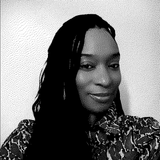
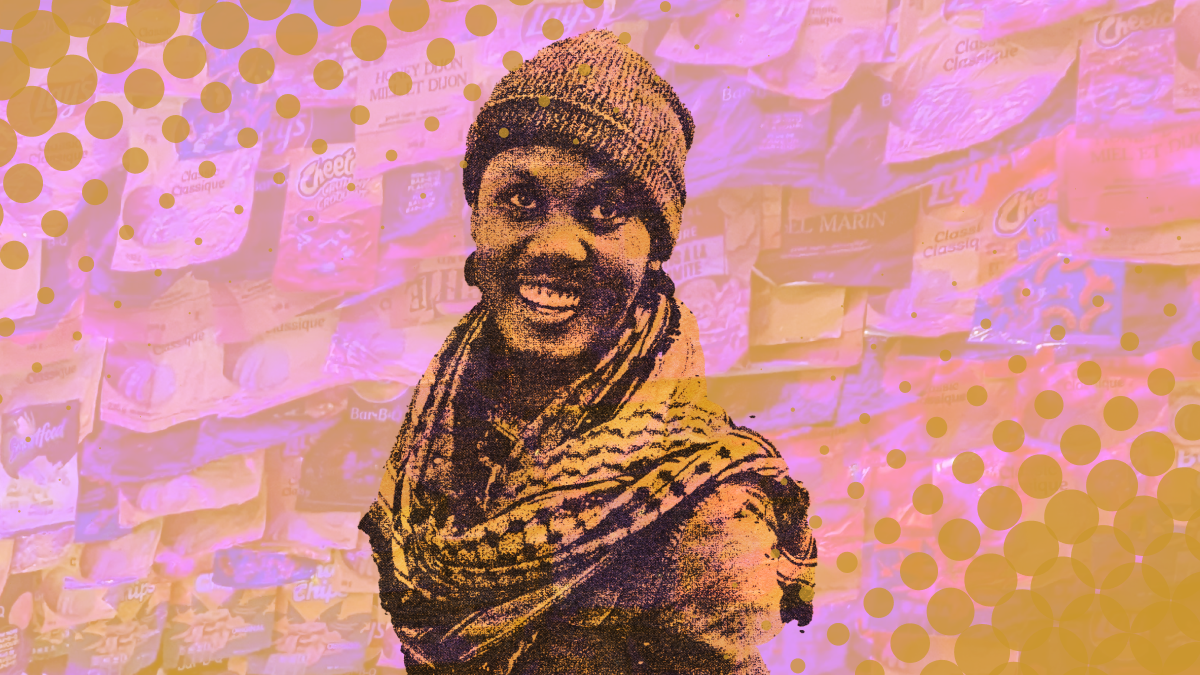
In the work of Toronto-based artist Happie Micha Edwards, creativity begins with care. A performer, storyteller, and interdisciplinary artist, Happie Micha moves fluidly between mediums—performance, food rituals, speculative storytelling, and community gatherings—to ask an urgent question:
What does it mean to nourish one another in a world that often forgets care?
Their projects often center communities historically excluded from shaping the spaces they inhabit. Whether through speculative cultural kitchens, performance rituals, or storytelling projects, Happie Micha sees art not as protest alone, but as a way of conjuring structures of care that do not yet exist.
IDENTITY AND PLACE
AISHATU: Where are you based right now, and how does that place shape your work?
HAPPIE MICHA: I’m based in Toronto, specifically in the Little Jamaica area. Historically, it’s been a Caribbean enclave—Black businesses, immigrant communities, all these different cultures gathering in one place.
There’s something powerful about that history. It holds a vision of what community can look like, but it also holds the reality of the present—gentrification, displacement, and systems that continue to shape who gets to stay and who gets pushed out.
I’m not approaching that from a place of saving anything. I’m not here to save a neighborhood or even to save myself. What I’m curious about is how my creative practice—my voice, my work, the projects I build—can contribute to spaces where people who have historically been excluded from shaping cities and communities can begin imagining those spaces differently.
Sometimes that happens on stage. Sometimes it happens through a community dinner. Sometimes it happens through storytelling.
For me, those moments become rituals for imagining different futures.
NAMING THE PRACTICE
AISHATU: When someone asks what you do, how do you describe your work?
HAPPIE MICHA EDWARDS: It depends who I’m talking to. If I’m speaking with another artist, I might say that I’m a spiritual being with an interdisciplinary practice. I work with food, storytelling, performance, and ritual to create experiences that help people reconnect to something deeper than the everyday structures that define us.
But if I’m speaking to someone who needs a simpler answer, like a funder or a collaborator, I’ll say that I’m an artist who creates visual work, performances, and storytelling experiences. I perform, I write, and I design immersive experiences.
At the core of it, though, I’m interested in connection. I’m interested in creating spaces where people can move beyond the ordinary limitations of identity and rediscover their relationship to source.
And I’m also a performer. I love performing. It’s one of the ways I connect most directly with people.
CARE AND THE BIRTHRIGHT TO NOURISHMENT
AISHATU: What is the central question you keep returning to in your work?
HAPPIE MICHA: One question I return to again and again is: who cares for the caretakers? Who creates ritual, rest, and nourishment for the people who are constantly giving to others?
I’m also deeply interested in something very simple but very powerful: the idea that the basic things humans need—food, water, shelter—are our birthright. Somewhere along the way we forgot that. Food, especially whole and nourishing food, is not a luxury. It’s a human right.
I think a lot about how systems and structures make people feel like their suffering is their own fault. But often it’s not personal failure. It’s structural conditions.
For me, art is not about fighting systems directly. I used to think it was. Now I think it’s about something else. It’s about conjuring what’s possible.
Instead of constantly resisting what exists, creativity allows us to imagine what doesn’t yet exist, and then begin living toward it.
Our power comes from that imagination. Even in moments when I don’t know what my own future looks like, I feel connected to that possibility. Sometimes it feels like everything around us is moving in the opposite direction, but I believe there is still something good emerging, even if we can’t fully see it yet.
For me, creativity is about noticing what is missing and conjuring new possibilities into being.
And I want to share that especially with younger folks, people who might recognize themselves in my story as an immigrant, as an island person, as someone shaped by colonization and diaspora. I want my work to offer them a sense that something else is possible
LINEAGE
Micha often begins performances by dedicating their voice to ancestors whose care shaped their life.
HAPPIE MICHA: My lineage is my village. My ancestors move through everything I create. Before I perform, I dedicate my voice and my spirit to them.
One of the people I often think about is my uncle, Presley. He was a Jamaican man who expressed his care through creativity, through flowers, through decoration, through helping the family celebrate life, and I see him now as a queer elder ancestor who modeled for me crafting care and beauty.
If someone needed a cake for a wedding, he made it. If something needed decorating, he did it. When my family didn’t have money for school uniforms, he made sure we had what we needed.
I think about the life he might have lived, growing up in a context where he may not have felt safe expressing all parts of himself.
He had a flower shop in Kingston. A small but central flower shop. And for a long time, I had this strange resistance to fake flowers because of that. I used to think they were lifeless or superficial. But over time, my perspective shifted.
I started realizing that artificial flowers are also a kind of human creativity. They allow beauty to last longer. They allow us to keep something visually alive without constantly taking it from the land.
That realization changed the way I thought about his work and about care.
I dedicate my performances to him because I want to live the kind of life where the beauty we bring into the world isn’t hidden.
There’s also a cousin of mine named Peaches who protected me when I was young. When people teased me for being different: how I moved, how I spoke. She would stand up for me.
She used to give me the sweet cream from cookies she was eating. It sounds small, but it meant something.
It meant I had a place where I felt loved and protected.
Those moments of care stay with you. They become part of the work.
THE WORK BENEATH THE PERFORMANCE
AISHATU: Your work appears effortless to audiences. What does it demand of you that people don’t see?
HAPPIE MICHA: I think the most important part of my ability to perform, communicate and connect with people is that I have to stay connected to myself.
Growing up, especially in my teenage years, I internalized a lot of ideas about myself because of same-sex attraction. Ideas that were devastating. I believed that if I could just contain myself, fix something about myself, or figure out what was ‘wrong,’ then maybe I would be loved. Maybe I would feel connected to my family. Maybe I wouldn’t become one of the stories we hear about, someone who ends up lost, broken, or dead in a ditch.
Those kinds of stories become statistics, and they shape how you see yourself.
So for me, the work has been confronting all the parts of myself that are afraid. The parts that fear rejection. The parts that fear humiliation. The parts that fear being misunderstood, exiled, or cast out.
For a long time I believed fear had ultimate power over me. But I’ve learned that isn’t true. Through my performances and my writing, I challenge the fear that was conditioned within me. And to this day, that’s still the biggest work.
When people see me perform, they often see what Maya Angelou described. They see the butterfly. They get to revel in it. But most of the time they don’t see the journey that butterfly went through to become the butterfly.
I don’t forget that journey. I can’t.
I think many performers carry a wound that doesn’t completely heal. That wound keeps us connected to something powerful, but it also hurts.
And it’s heartbreaking sometimes.
That wound might never fully disappear in this lifetime. But I’ve learned that if I shift my perspective, the suffering and heartbreak can become something else. It can become a blessing. It can become beauty. It can become a contribution to life.
But that doesn’t mean it stops hurting.
Sometimes people assume the hardest work is discipline, showing up every day, writing, rehearsing. But for me the real work is the inner work.
Some of the pieces people respond to the most didn’t come from struggle. They emerged naturally. The real challenge was creating the space inside myself where that emergence could happen.
And sometimes I forget that. But that’s the true work.
IMAGINING COMMUNITY
Recently Edwards has begun focusing more on projects rooted in community spaces and local storytelling.
HAPPIE MICHA: Right now I’m focusing on community-scale storytelling and projects that bring people together locally.
The world can feel overwhelming, but neighborhoods are where transformation actually happens.
One project I’m developing is a speculative story about the Little Jamaica Cultural Community Kitchen. It imagines a space where food, culture, and intergenerational care come together.
Right now it’s fictional. It doesn’t exist. But that’s the point.
Speculative storytelling allows us to imagine structures of care before they exist in reality. For me, words are powerful tools. They can destroy, but they can also build.
I want to use words to design possibilities so compelling that oppressive systems begin to lose their hold.
And the goal isn’t to build a large audience. It’s to create vessels for connection.
WHAT ARTISTS NEED
AISHATU: What resources do you need that you don’t yet have?
HAPPIE MICHA:Financial resources matter. Artists need to be able to pay collaborators fairly and support their teams.
But resources are more than money. They include rest, nourishment, space, and time.
During the pandemic, I experienced something unusual. For a period of time, my basic needs were met and I had rest. And what surprised me was that rest didn’t make me lazy. It unlocked creativity. Projects emerged that I had never imagined before.
When people are nourished—physically and emotionally—they create extraordinary things.
So for me, resources mean creating environments where artists and collaborators are cared for as whole human beings.
LEGACY
AISHATU: If someone encounters your work many years from now, what do you hope they take away?
HAPPIE MICHA: That this bitch perfectly performed in the most imperfect way. Someone who allowed their flaws and vulnerability to be visible.
Most of all, I hope my work reminds people that creativity doesn’t belong to a select few. It belongs to all of us.
If someone leaves a performance and realizes that the source of creativity—whether they call it God, Allah, Buddha, Krishna, spirit, or something else—also lives inside them, then the work has done its job.
Because that’s what other artists gave to me. Sometimes I don’t even remember their names. But I remember how I felt in their presence.
If my work leaves that kind of feeling behind, then I’ve done what I came here to do.
STAY CONNECTED
Website: https://happiemicha.com
Instagram: @happiemichaedwards
Facebook: https://www.facebook.com/happiemicha
Indigogo croudfunding Campaign: https://www.indiegogo.com/projects/happie-micha/fund-the-likkle-jamaica-cultural-comm-kitchen-audio-story
Tickets to show: https://www.eventbrite.com/e/the-fya-fya-show-tickets-1980231314167?aff=oddtdtcreator&keep_tld=true
Linktree- https://linktr.ee/happiemicha