Day & Night: The Emerging Aesthetics of New Wave Neo-Luddism
I followed a DJ to a phone-free, clown-themed dance floor and stumbled into a living experiment in neo-Luddism. From luxury dumbphones to sweaty nights off-camera, two aesthetics of opting out are emerging: “luxury low-tech” and “phone-free presence”.

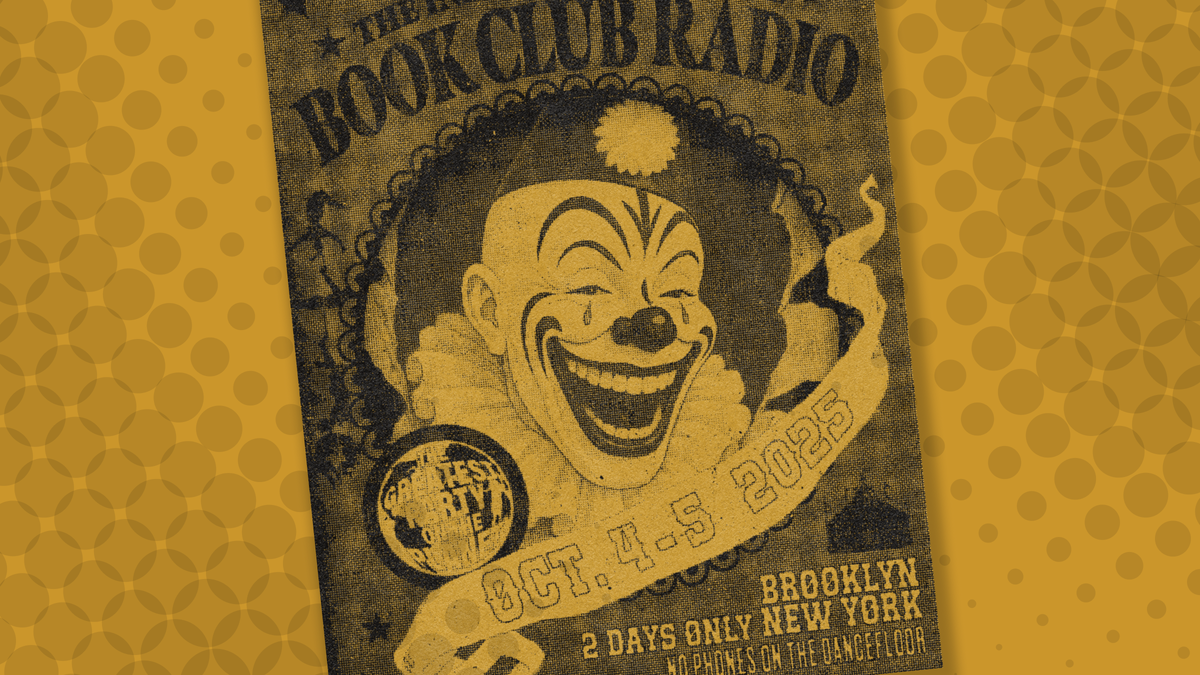
My golden rule for a guaranteed good time when navigating New York nightlife: always follow the DJ. Because when you love the DJ, it doesn’t matter the time, venue, or crowd; you can close your eyes, move your body, and enjoy the music.
So, a few months ago, when Lovie, one of my favorite DJs, shared that she was doing a set at Book Club Radio’s inaugural festival, I was there — no questions asked.
Having literally asked no questions, when I got my ticket confirmation, I learned two things: (1) it was a circus-themed festival, and clown attire was strongly requested, and (2) Book Club Radio had a strict no-phones-on-the-dance-floor policy. I was no longer just excited about Lovie's set. I was intrigued by the whole premise of the party. And the experience did not disappoint.
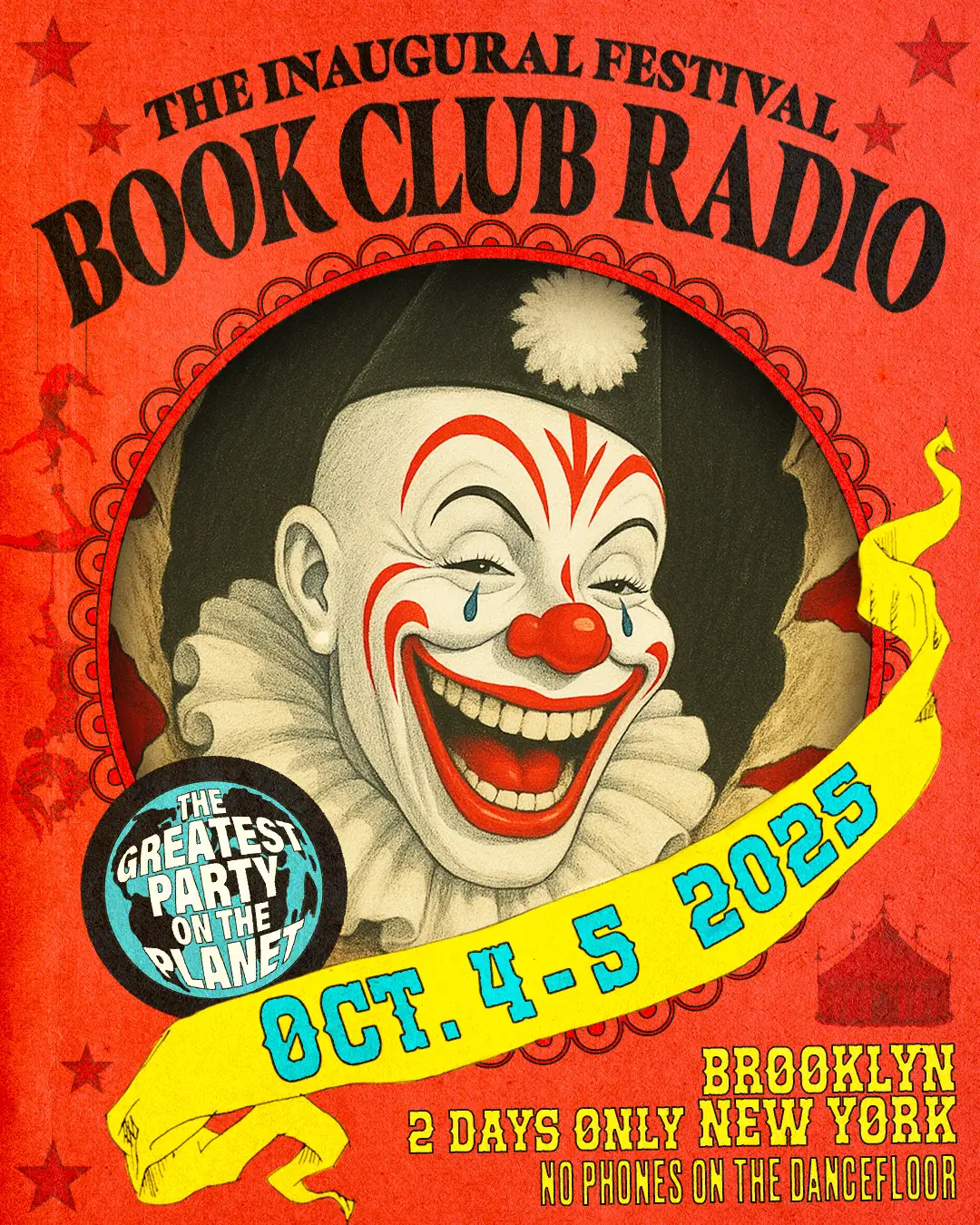
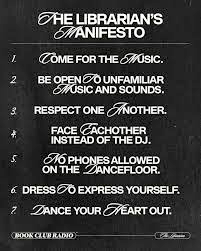
From left to right: (1) A flyer for Book Club Radio’s festival; (2) Book Club Radio’s manifesto
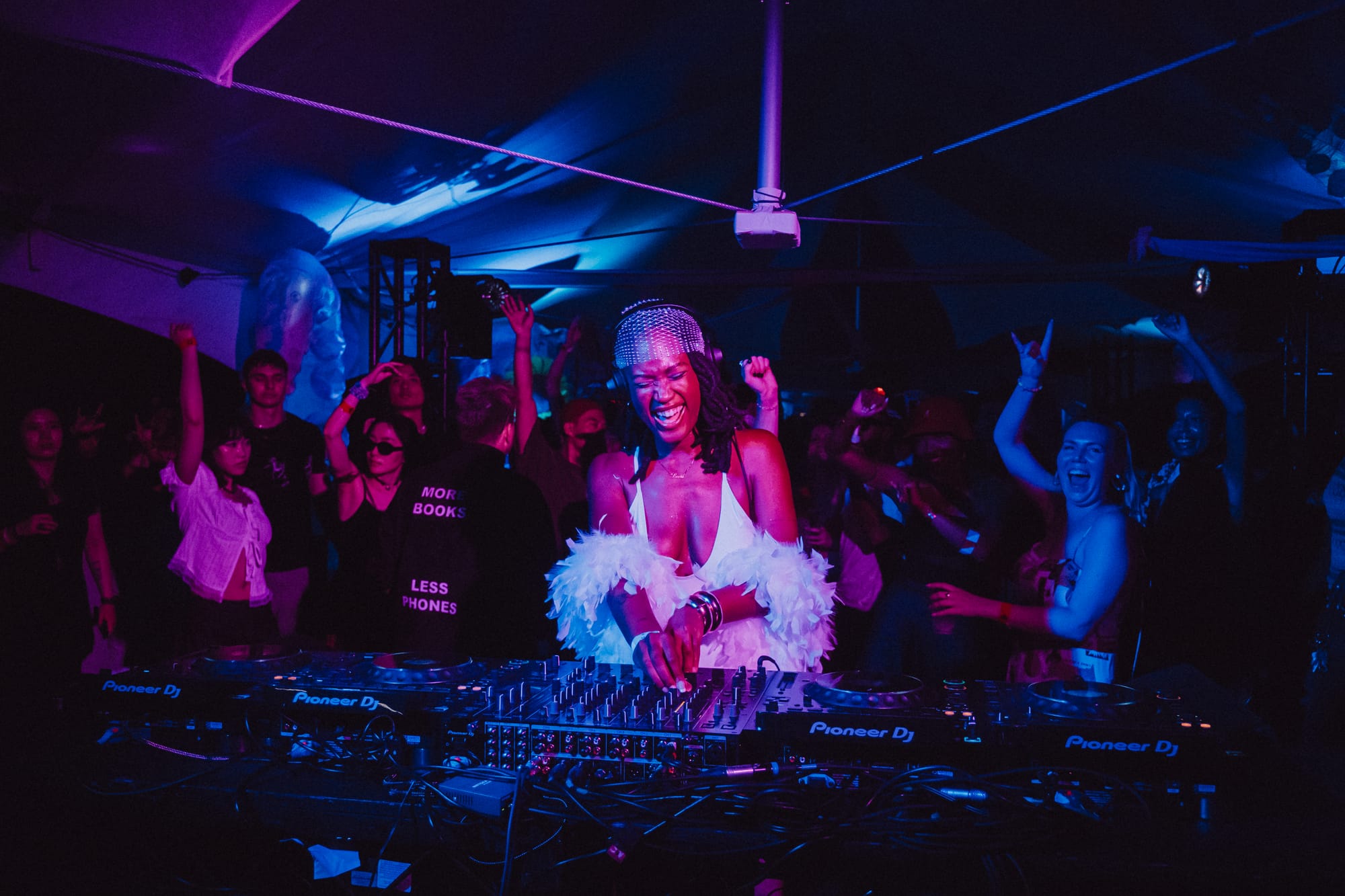
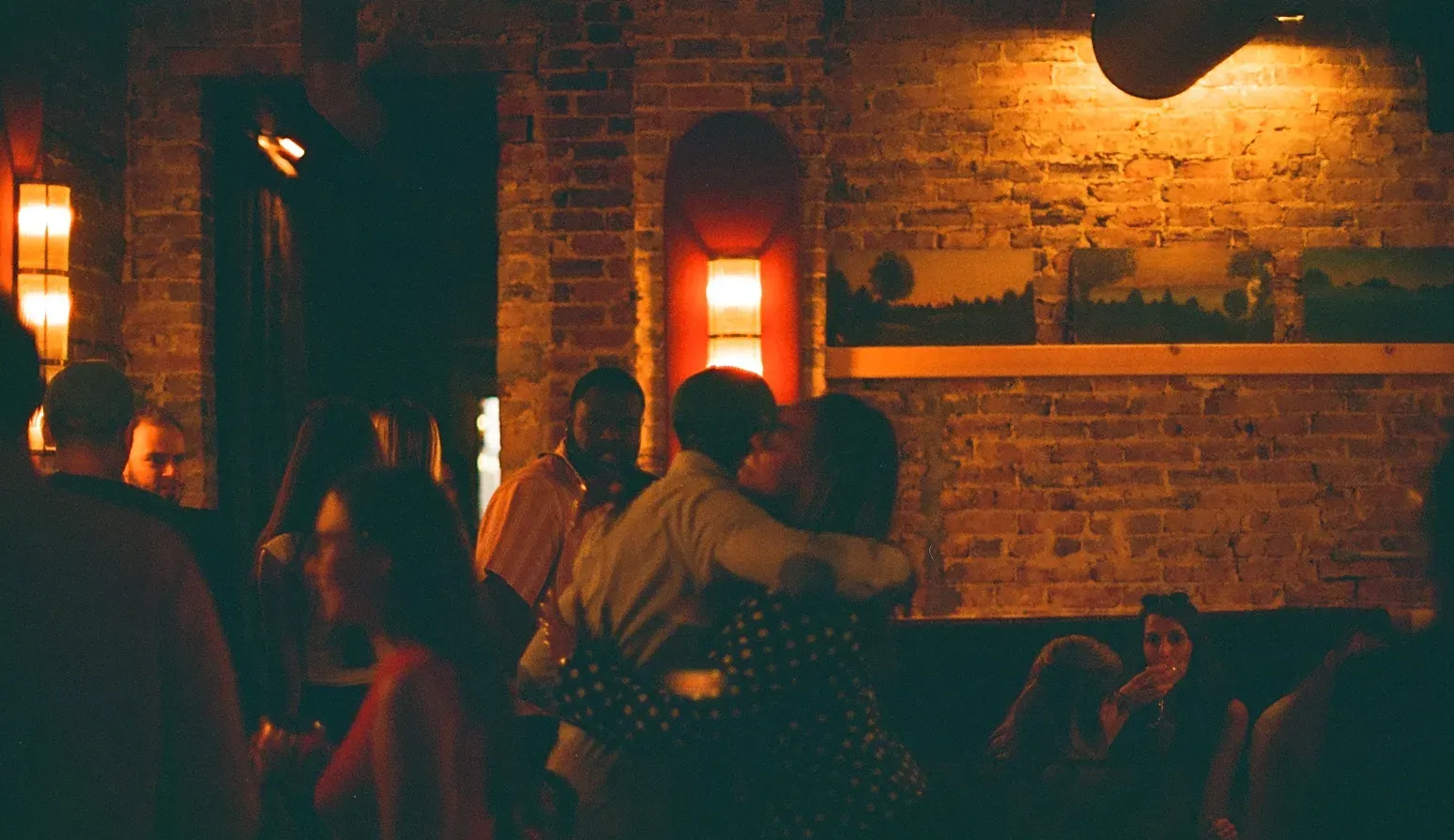
As sweat was dripping down my clown makeup and my early-thirties knees were quaking under the sway of my hips to Lovie’s soulful, house-thumpin’, disco-bumpin’ DJ set — mentally, I was transported. To an era of naughty opulence where I could imagine the sound of cocaine lines being snorted and the sight of bodies on the dance floor shedding their clothing and inhibitions with every track transition. I imagined this, not just because the music took me there, but because I think many of us can imagine giving in to our most indulgent desires when we know that no one else is looking. And by no one, I mean the ever-present phone cameras in our hands, ready to record at any moment, a semi-permanent transhuman extension of mass surveillance culture.
In this phone-free environment, everything felt possible. I could be dressed like a clown, red nose and all, dancing like I caught the Holy Ghost on a Sunday in church. Liberated from my own hyper-awareness of people’s perception or the clock’s time, thanks to the lack of the phone, a physical manifestation of both.
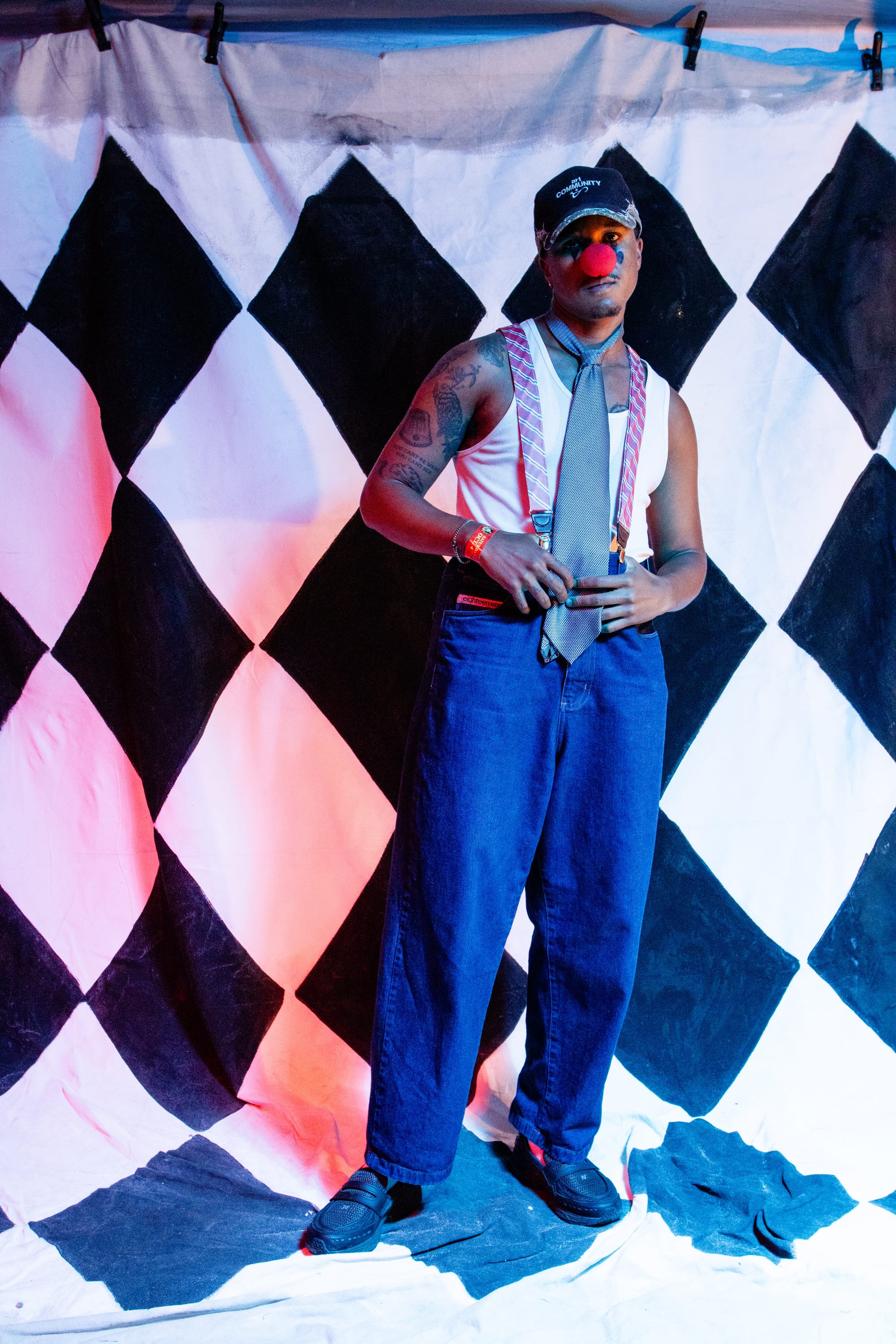
This was neo-Luddism in practice. In its rawest, most seductive, and deeply human form. It looked like dark rooms and neon lights, sounded loud, and smelled like a mix of Santal 33, natural deodorant, and human sweat. Like a Saturday night in New York City.
When I woke up the next morning, I reflected on how much I loved the experience because it was phone-free. How we need more phone-free spaces and collective practices to liberate us from doomscrolling’s destructive spell, deteriorating our ability to form anything other than parasocial relationships with every swipe. As I raved about how much I advocate for a lifestyle where we’re all less dependent on our phones for a good time, I stared at my Light Phone III, still sitting in its box since it arrived last month.
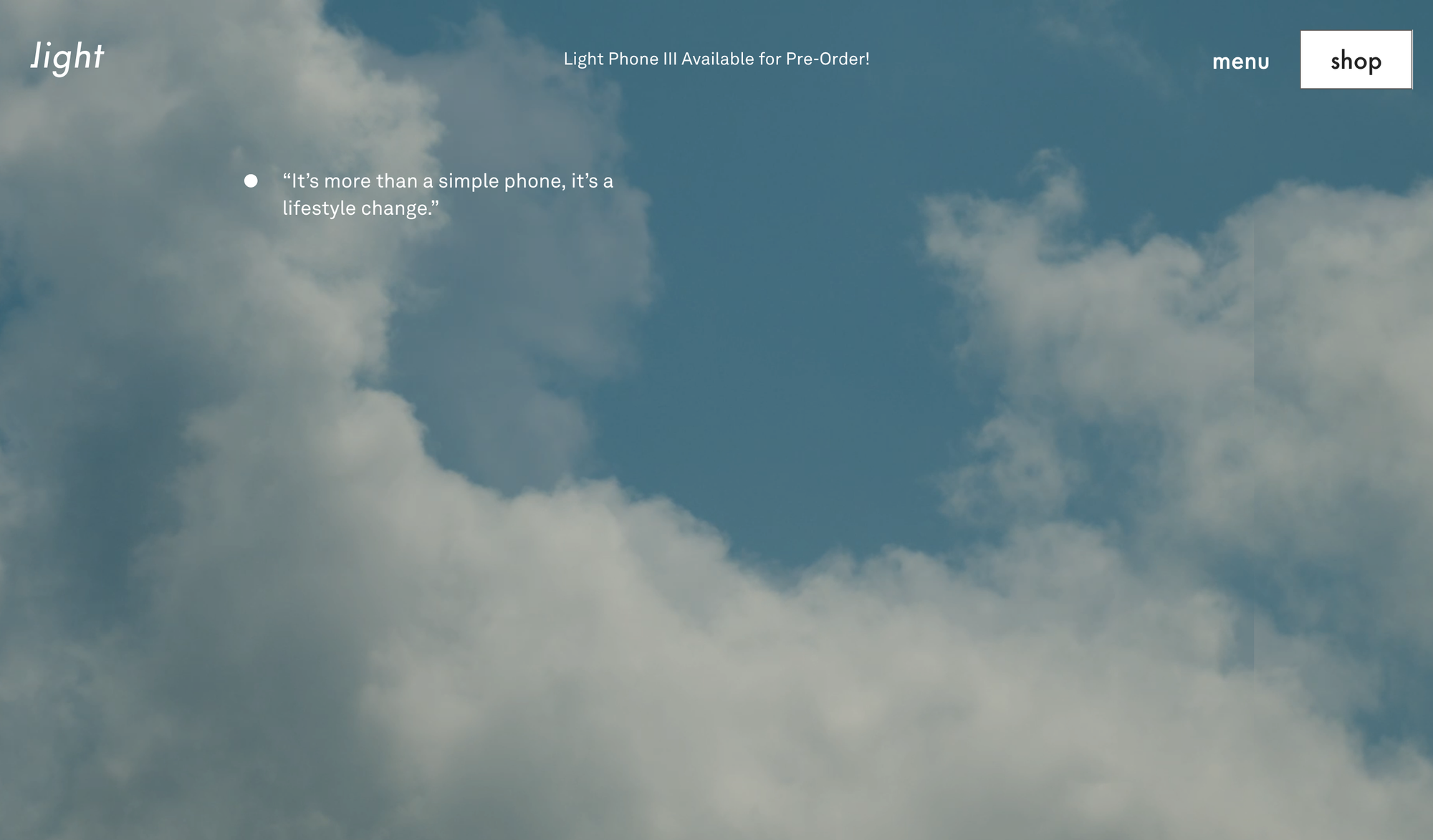
The Light Phone could be described as the “luxury” brand of dumbphones. When you land on their homepage, you’re met with blue skies and perfect clouds. Scroll and you’ll see videos: a person peacefully skateboarding during the day, another standing in the middle of the ocean, another drawing in a sun-drenched studio, another biking on a city street. If you’re a creative, much like me, who dreams of wanting it all — a simple life in the big city, where you spend your days biking, working in your art studio that you can somehow afford along with your actual rent, and escaping into nature on the weekends — the Light Phone III sells you that vision with their seven-hundred-dollar cell phone that is ultimately designed to focus on taking and making calls.
This daylight, nature-driven aesthetic has become the calling card of the recent crop of "anti-attention/surveillance/Big tech" consumer products. Daylight Computer’s DC-1, a “de-invented” computer for deep focus and calm, is priced at seven hundred twenty-nine dollars and its product photography is shot almost exclusively outside, in grassy environments. Freewrite’s line of distraction-free writing devices — ranging from three hundred fifty to one thousand dollars — photographs its products being used outside at coffee shops and at the beach.
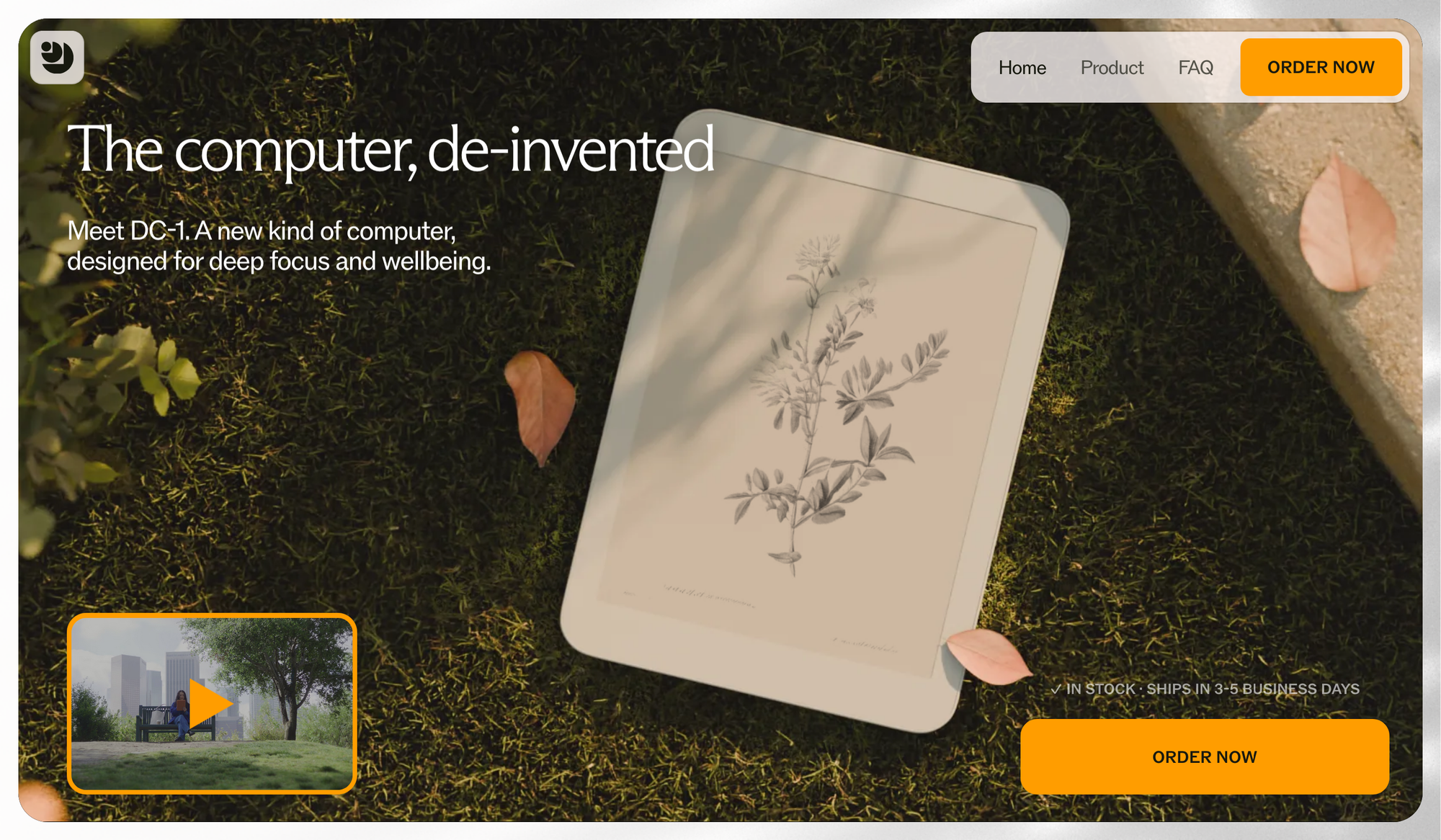
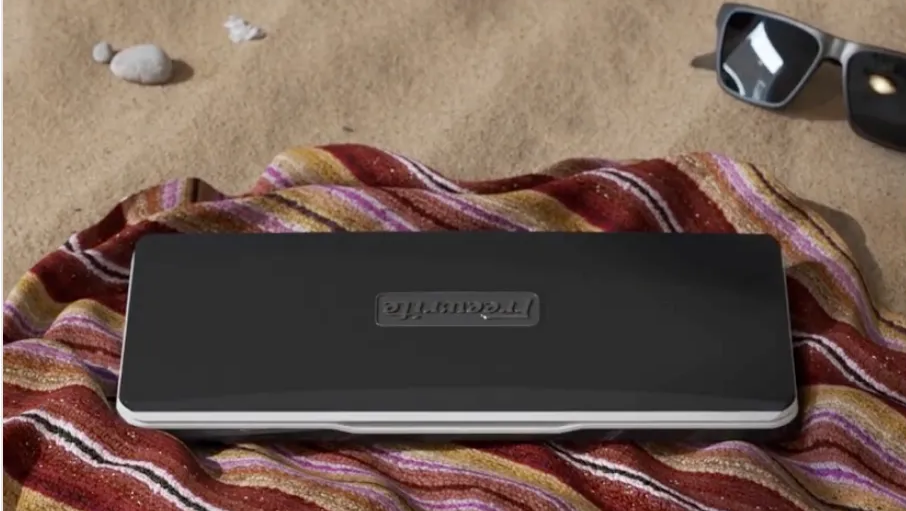
From left to right: (1) The website for Daylight Computer; (2) A Freewrite device at the beach
The message is consistent across all of them: true autonomy over your time looks like having true autonomy over your tech.
The person who can afford an additional seven-hundred-dollar device that makes their life spiritually more at ease (but materially more inefficient) is probably someone who still relies on an ecosystem of connected devices, but has the freedom to freely switch between the two. Perhaps this person is a professional creative or "knowledge worker" making a comfortable, six-figure, expendable income, somehow without being beholden to a constant stream of work-related notifications.
When I purchased my Light Phone III, I was, to some degree, this person. As a screenwriter working by myself on a feature screenplay, the only communication I was doing was via phone calls and the occasional Zoom. I had the flexibility of time and the luxury of being technologically inefficient. This class of products sells a fantasy of disconnection to those who can afford — through time, money, and/or status or leadership position — to disconnect.
But while these luxury brands are packaging neo-Luddism as a path to individual enlightenment through focus, calm, presence, and authenticity, there's another version of opting out that looks and feels entirely different, happening at the same time and in the same city.
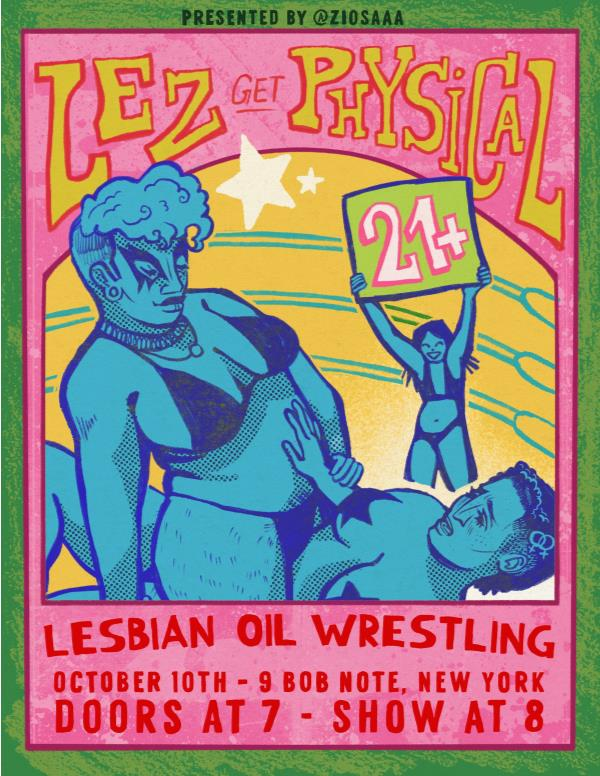
The weekend after Book Club Radio, my friend went to a lesbian oil wrestling event. I asked how it was the following day and all I could get was a verbal recount because phone recordings weren’t permitted.
A couple of weeks later, I traveled to Washington, D.C., for another phone-free event at Hush Harbor, D.C.'s first phone-free bar, with Month Offline. M.O. (for short) is a community that offers paid cohorts to swap your smartphone for a dumbphone for thirty days, with weekly community and accountability built in.
I couldn't help but notice what these three experiences had in common and how they contrasted with their product-based counterparts. They were far more affordable than the physical products I mentioned earlier. They took place at night, compared to the products that were all marketed as being used during the day. Their visual identities are darker in color scheme and more playful and nostalgic in design direction; an aesthetic antithesis to the clean polish of the product’s websites. And there was one more notable commonality. While the products spoke to an idea of who “the offline individual” could be, the festival, the wrestling, and dumbphone accountability group presented a vision for what “the offline community” could look like.
That's when it became clear to me. Anyone interested in the Light Phone III or a phone-free dance party probably shares similar new-wave, neo-Luddite ideals (a desire to reclaim their time from addictive tech, to minimize spoon-feeding their data to Big Tech, to resist surveillance, to feel present again, etc.). And from that same impulse, two distinctly different cultural aesthetics and philosophies are beginning to emerge from a branding and visual identity perspective.
The aesthetic of “luxury low tech” is clean and aspirational, selling you a vision of a self-improved, neo-Luddite lifestyle through product-based consumption. Buy better tech, not bad, Big tech. While the aesthetic of “phone-free presence” is raw and real, selling you a night of pleasure and communion that you can opt into right now, tonight for the low price of a door fee or a beer. One draws its design principles from the future — a greener companion to tech culture’s relentless obsession with white-spaced, sans-serif elegance. The other, from a shared, pixelated memory of the ghosts of technology’s past — a desire to go back to forge forward.
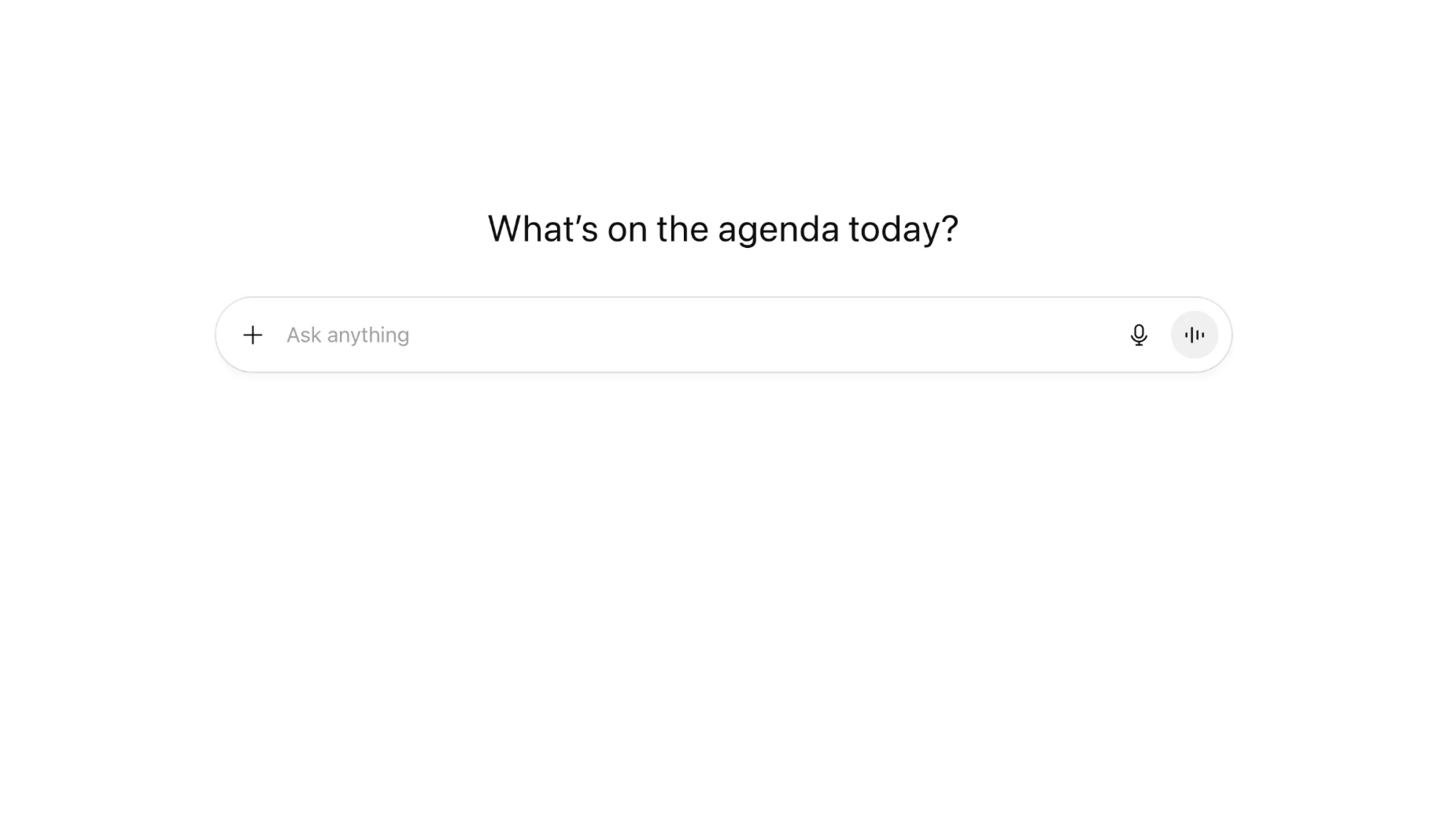
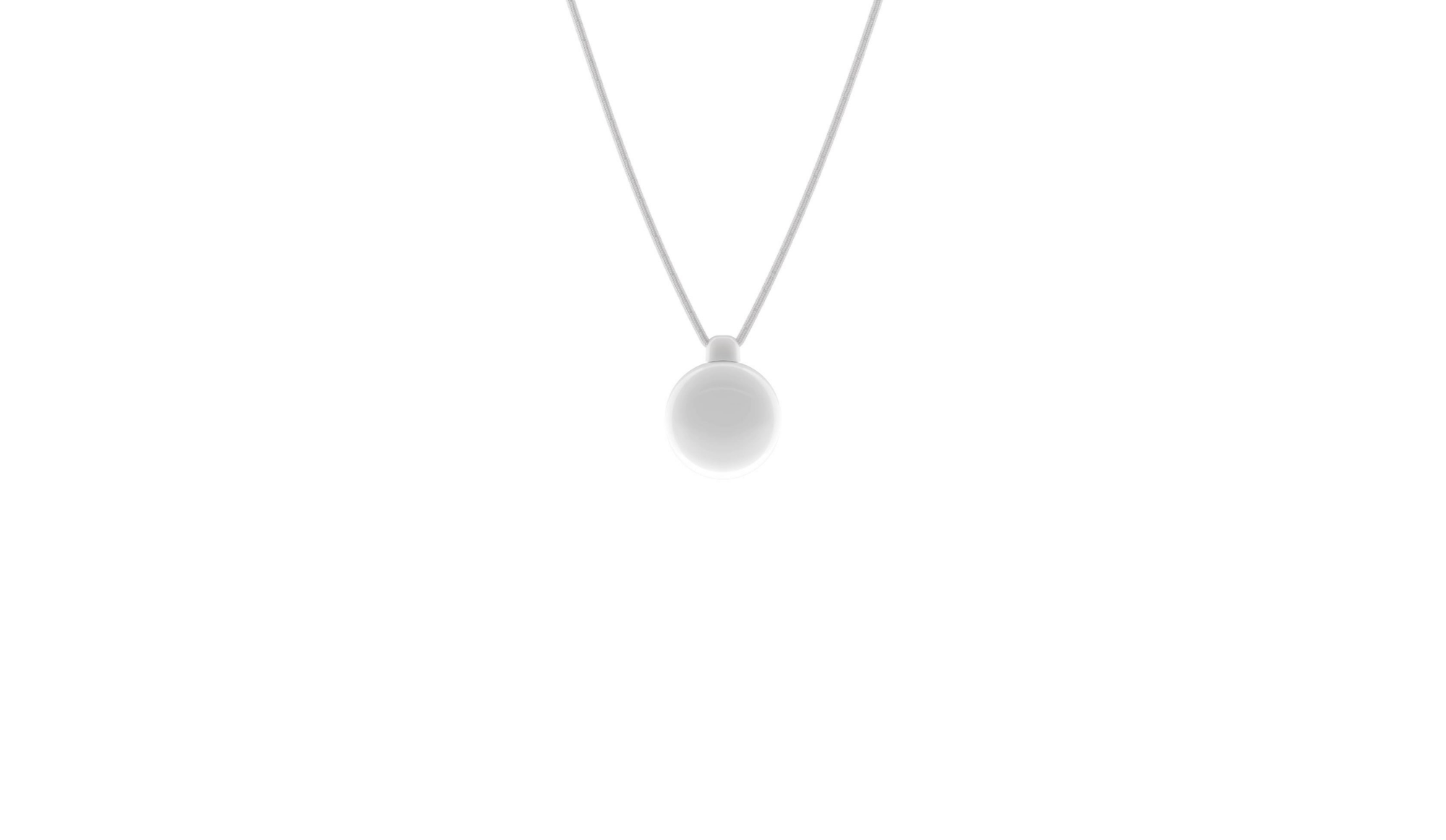
From left to right: (1)The landing page of OpenAI’s ChatGPT; (2)The website for Friend’s AI pendant.
The same principles hold when considering more affordably priced products that align with this “phone-free presence” cultural aesthetic.
The cost to join a Month Offline cohort is seventy-five dollars. That price includes receiving a flip phone that syncs to your smartphone for call and text forwarding, a much more affordable, frictionless, and nostalgic alternative to a touch screen phone like The Light Phone. And for twenty-five dollars a month, you can simply buy their dumbphone and try it yourself.
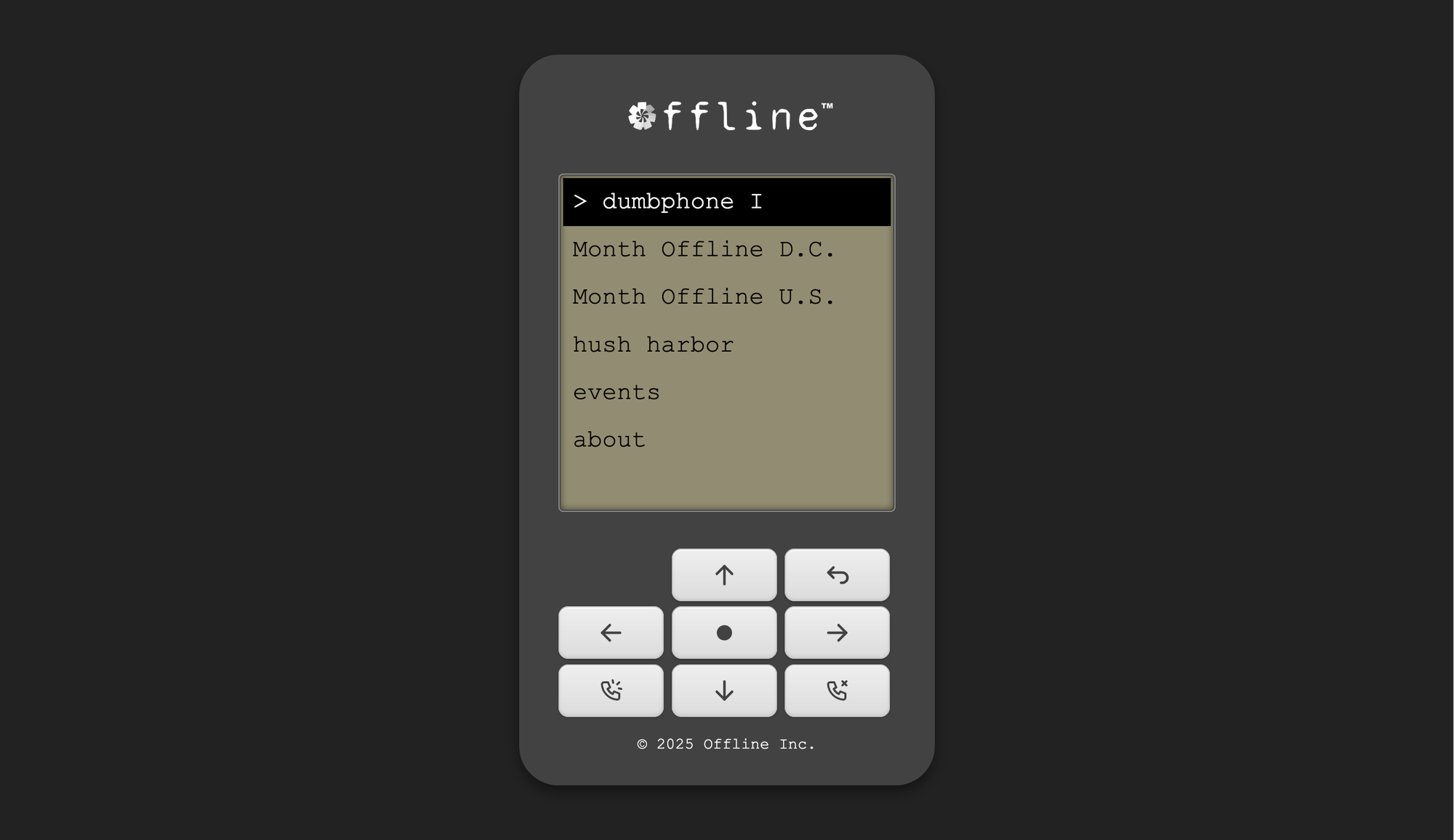
From left to right: (1)Month Offline’s website; (2)Hush Harbor, DC’s first phone-free bar.
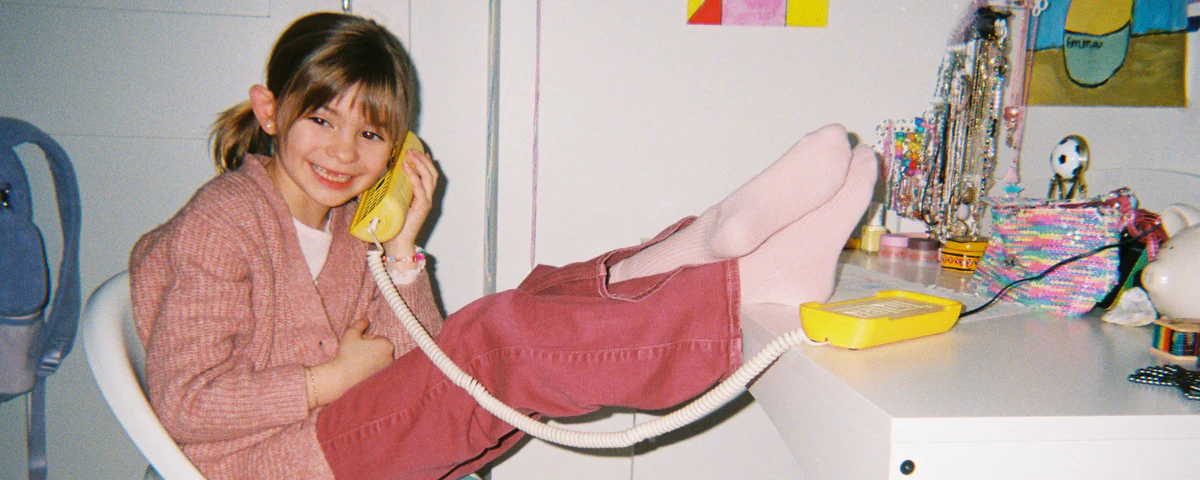
As I fantasized about a month of being liberated from my smartphone, I began to think about buying a disposable camera, another nostalgic technology coming back in style as a form of technological resistance, despite smartphone cameras getting better and better each year. Manual, a Black-owned, NYC-based film camera brand that sells disposable cameras guaranteed to sell out, speaks directly to the "phone-free presence" aesthetic. Their website is all black, a visual nod to the illusion of night, in stark contrast to the “luxury low-tech” brands like Freewrite, whose websites utilize a lot of white space. Their promotional videos for the new digital camera (priced under one hundred dollars) showcase DJ sets, late-night skate park sessions, and club turn-ups — all communal, nightlife-adjacent moments. Somewhat similarly, Tin Can, a seventy-five-dollar play on those old curly-cord landline phones for the Wi-Fi-calling age, uses colorful, playful design and overexposed flash photography that evoke a pre-smartphone era. Both products offer a vision of opting out without the luxury price tag by opting into to having fun using affordably redesigned relics of the 90s-00s that jolt us into remembering what connection felt like before smartphones got in the way.
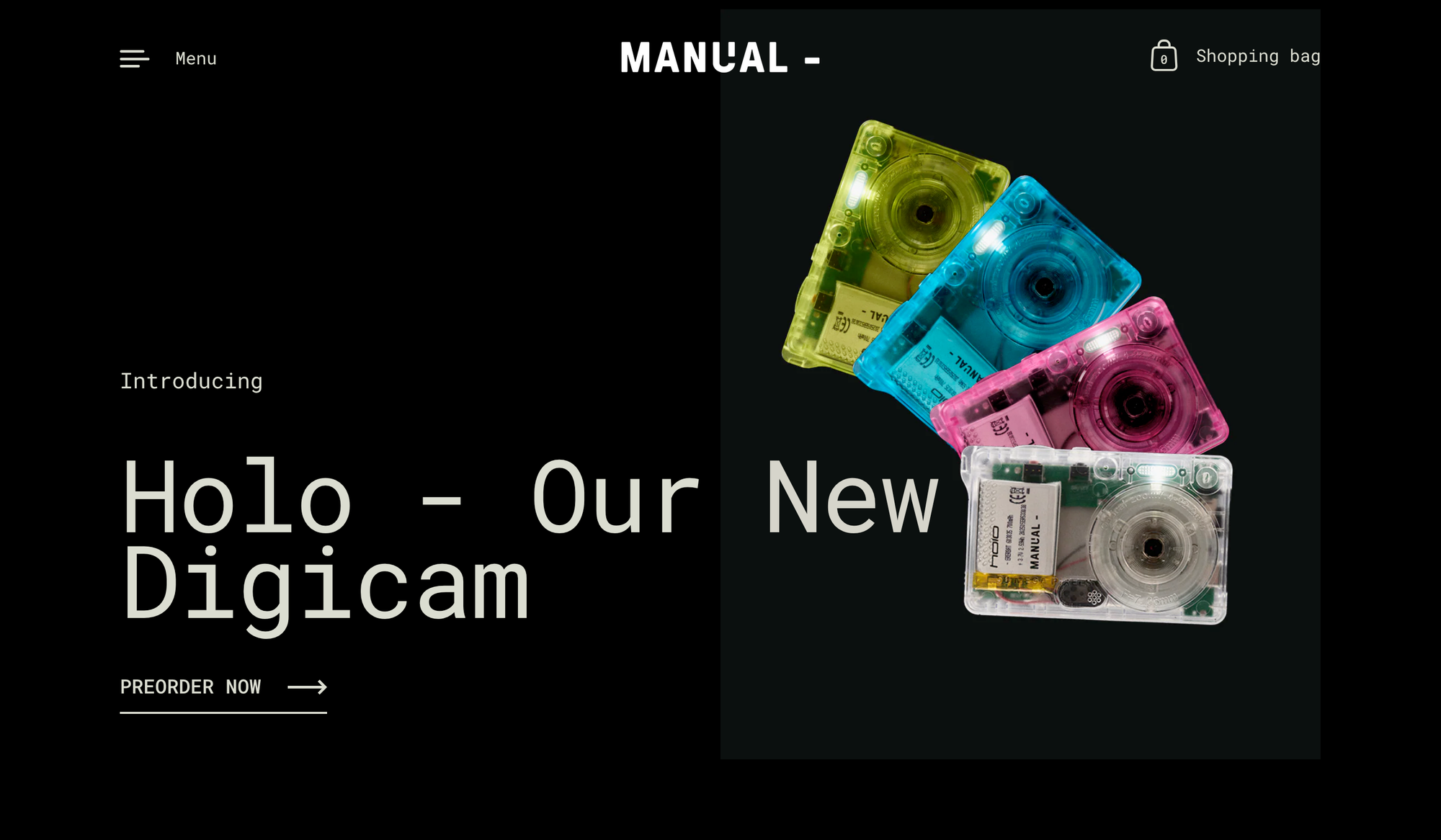
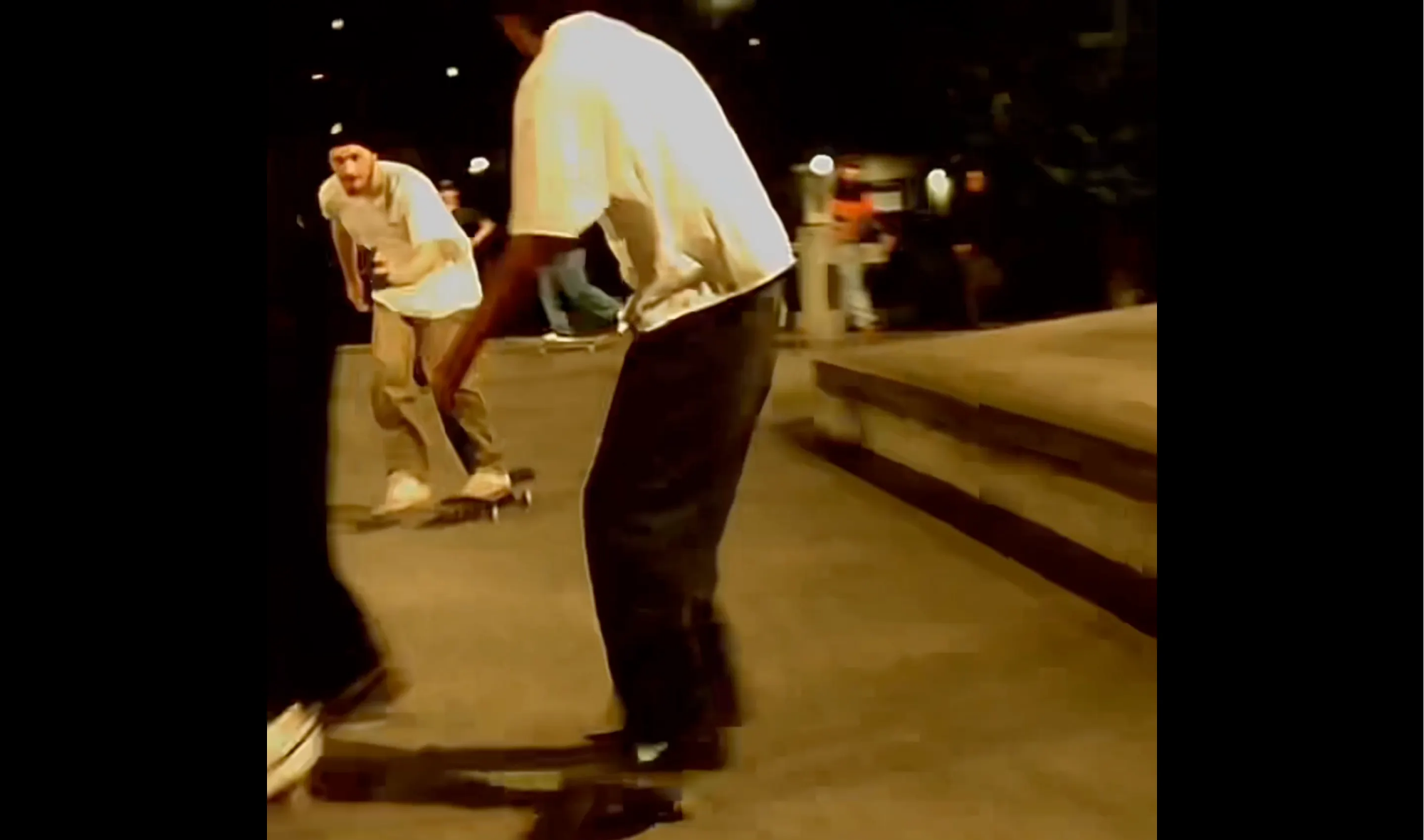
From left to right: (1)Manual’s new digital camera, Holo; (2) Footage from Manual’s Holo digital camera
I’m not saying that one aesthetic is right and one is wrong. I’m a Light Phone III owner who aspires to own more luxury low-tech devices, like the Remarkable tablet and a Loftie alarm clock. And I love checking out phone-free spaces where I feel the effects of living a more unplugged, present life through connecting with others and not thinking about my phone if I feel bored or shy. In the face of Big Tech's ridiculously far overreach into every facet of our lives, the more ways we can get people to imagine a life where they’re a little less addicted to and hooked on their connected, ever-surveilling devices, the better.
And as someone who works in branding and advertising, I also can’t help but see how brands, products, and communities are reaching people and which people are reaching back.
I won’t be surprised if we continue to see the rise of phone-free subcultures physically manifest into more parties, clubs, and communities, each with its own variation of this phone-free presence aesthetic. Then, like all subcultures, we’ll begin to see that rawness — that aesthetic inspired by capturing what it feels like to live, like really live — trickle into the branding aesthetics of products that want to inspire you to buy.
Perhaps the work of former Presidential candidate Andrew Yang speaks to this aesthetic cycle. Around the same time as the Book Club Radio Festival, Yang was putting on his own no-cost, phone-free party, simply called the Offline Party. On par with my trend spotting, the party’s brand aesthetic is dark blues, imperfect textures and overexposed photos of partygoers that look like they were captured on a Manual camera.
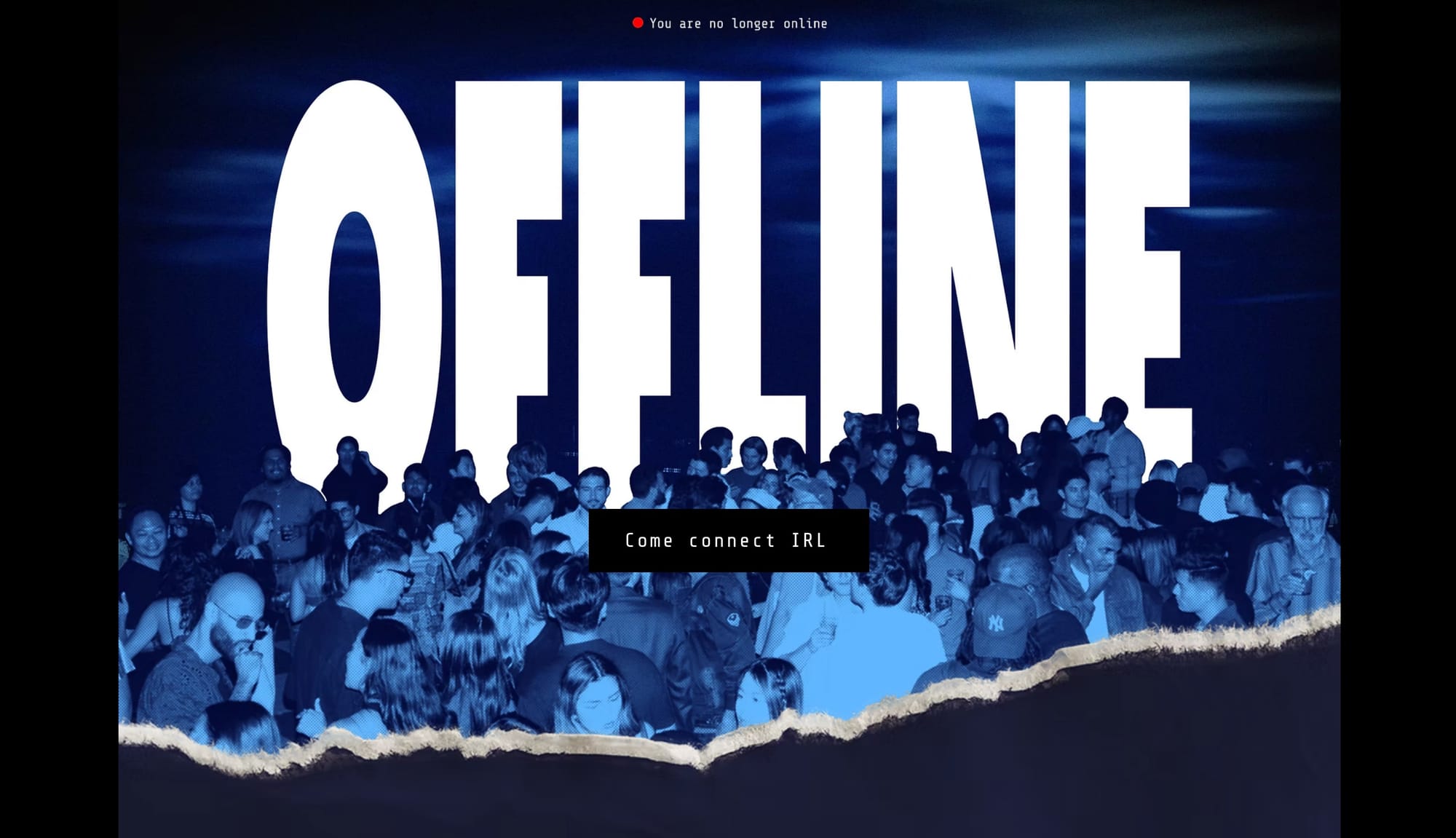
But then, once you’re sold on spending a little less time on your phone, Yang wants you to buy into Noble Mobile, his phone company that encourages you to spend less time on your phone and get cash back for your unused data. I’m not going to lie, it’s an intriguing premise. Still, it’s funny. Go to the website for Noble Mobile, a paid product, not a free party, and the aesthetic shifts track yet again. There’s more white space and a video of Andrew Yang in a green park in the daytime. But, there are those dark blues and imperfect, ripped textures from the Offline Party. It’s a callback. A memory. An emotional device for those who know. You remember that crazy, phone-free night. You remember the freedom you felt. So do we. Which is why we want you to buy our product, so we can give that life to you. Yang’s community offering and product offering swings between these two aesthetic trends, tying them together to the same brand, perhaps attempting to speak to everyone on the Neo-Luddite spectrum seeking a more present, less phone-driven life: from the party-goer to the professional.
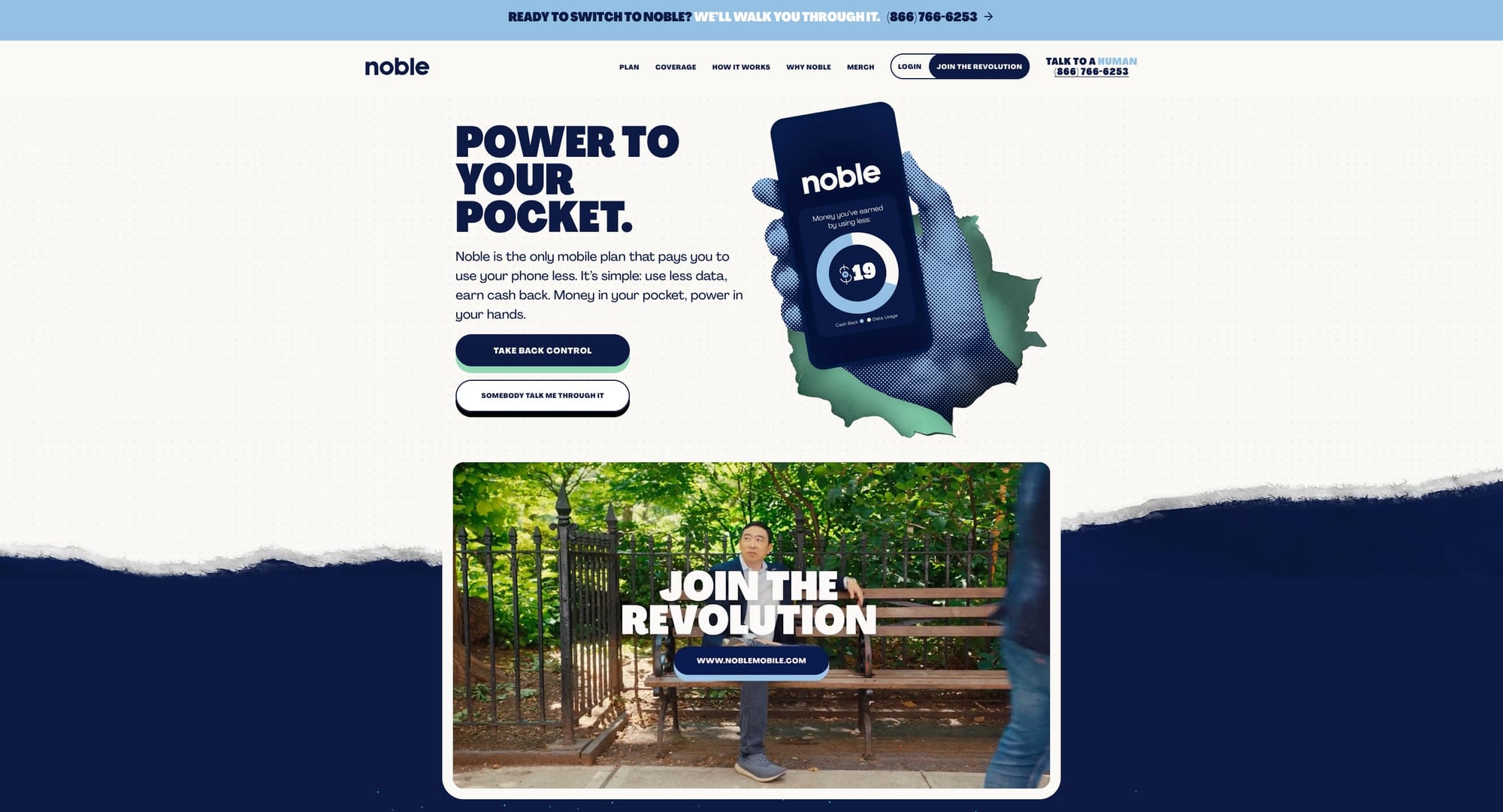
This is simply what design (and culture, for that matter) does: it swings one way and swings back in the other direction. I think what’s exciting about this moment is that there are clearly enough touch points that we can place on a wide enough spectrum that it has two ends to swing from. Each end still leads to a more intentional, less online life.
It does make me hopeful that an anti-tech uprising, where we collectively decide to throw our Apple and Android devices to the wind and replace them with Light Phones, flip phones, or modern-day landlines, could start with a DJ set. On a dance floor. On a Saturday night in New York. With a room full of people off their phones and nowhere to look but into each other's eyes, seeing reality for what it really is: a life worth experiencing together.
ABOUT THE GUEST CONTRIBUTOR
Van is a writer and strategist whose work explores how technology shapes power, identity and desire.