Creative Growth in a Cooperative Ecosystem: A Conversation with the Àrokò Design Department
"Because we're a community that's figuring out how to do business together, most of what we do together is play."
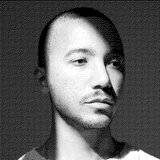
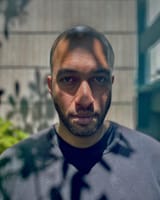

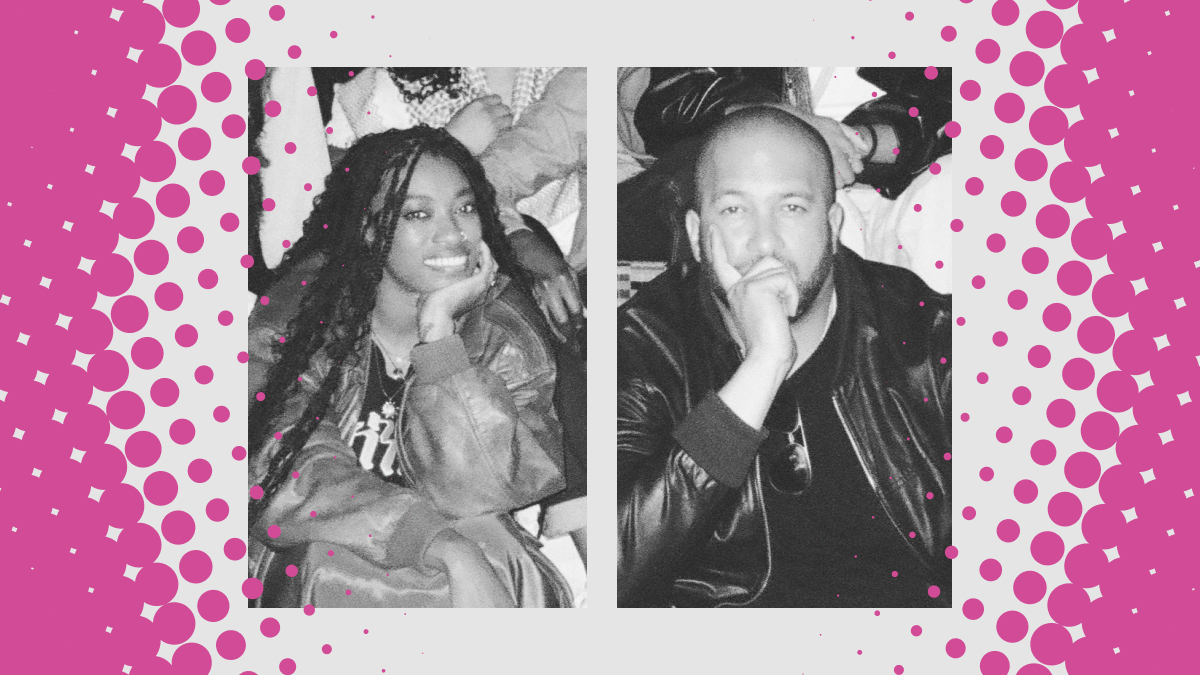
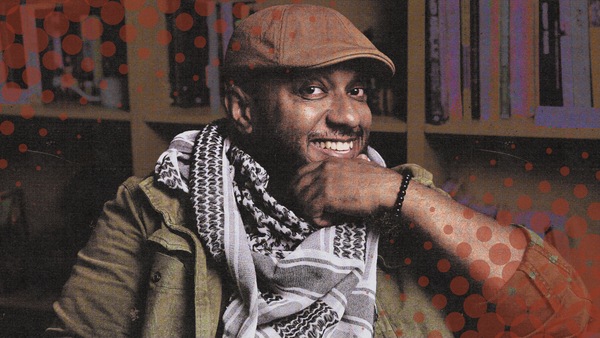
In the first entry in our member interview series, we’ll be introducing you to our Design department, led by our Design Director, Michael Collett and Designer, Kellyn Nettles.
Michael has been a working designer for longer than any of us, and is our resident type-obsessive. Having worked on everything from gallery installs to insurance rate sheets, Michael is focused on producing design that just works. Kellyn designs everything from zines to spaces, has a background in journalism, and recently completed a Master’s degree in exhibition design at The New School.
Our conversation that follows covers their design highlights with Àrokò thus far, the joys of being both the student and the teacher, and their shared fascinations with concrete.
Shakeil Greeley: As we close the books on our 5th year How has the working experience been at Àrokò over those years? Are there particular things that stick out to you both?
Michael Collett
This is amazing. Even when shit doesn't go right, it's still better than it going halfway okay somewhere else. Co-working or pair working especially at traditional studios, is so fraught. I hate having somebody over my shoulder. I hate being in the file with somebody. It's like, leave me alone. But that I think is so much about the sink or swim, zero-sum mentality of so many studios and just capitalism in general.
But when it's not about that, when we're all pulling in the same direction, we're all carrying equal packs, and when it's more of an actual team than the setups that you're traditionally in for, it's no big deal to grind 5 hours in a file with somebody on FaceTime. Since COVID, everything's been virtual and digital, but there's just such a different way of interpreting that interaction here.
Kellyn Nettles
I’ve enjoyed everyone's dedication to craft. I learn a lot from y'all in terms of like, not just being a cog in a machine. But asking, ‘What does it mean to be a cog?’
Michael
I think that's the difference between a team and a machine. "Teams are made up of people. You try to make a team full of the best people you can get and then you trust them to do their thing so that [you can do] y'all's thing together." Machines have parts that are subordinated and replaceable. But, anybody who knows real sports teams, knows that even if you got the same metrics and stats on a player, you can't just swap them in one for one because there's more to it than that.
Yeah, just ask Liverpool. So, Michael you have a lot of experience in the design industry broadly speaking but you also have extensive agency experience. How different and in what ways are we working in contrast to that more traditional environment?
Michael
I think a lot of my perspective on that is from having spent most of my time in agencies as a subordinate, and you become sensitive to how junior players are treated. I think a lot of how we've tried to go about doing agency style work here is to treat the inefficiencies of things like that, which you see when agencies ship work that, was very obviously just done from the perspective of some out of touch executive and everybody was clearly saying, ‘Hey, don't do that.’ The other thing is that those kind of hierarchical setups are expensive for clients. You've got a pyramid of people working to send large quantities of the value that they generate upward to people whose involvement is relatively minimal. I'm just sort of not built for shit like that.
There are things that I think we're teething with. One thing that I am conscious of and in wanting perhaps a little bit more capability for us internally, is just things like scheduling and and getting folks to be reliably in places. There is something to be said for the enforcement mechanisms of hierarchical organizations. And so it's a challenge for us to constructively, encourage people to go harder, which is a nice challenge to have to conquer.
And Kellyn, you came to us not long after undergrad, and you worked in kind of these larger in-house organizations. We don't technically have ‘juniors’ here right now, but you came to us when you would have been considered a junior in a more traditional setup.
Kellyn
At the beginning [of Àrokò Cooperative] when I was at Timeout, I was a Junior Designer. So I feel like working with y'all has been a lot of me growing through that if that makes sense. Michael, it feels like I was your apprentice.
Michael
The Sorcerer's Apprentice. That film is kind of about Mickey being left alone with the spell book, and so, yeah, in a big way, you were the sorcerer's apprentice because I was this absent-minded guy in a cloak who's like, "Yeah, just don't burn the place down.”
Kellyn
It’s both taking that agency and realizing a lot of this is about me getting confident in the work that I'm producing. Because one of the big shifts for me in working here has been I used to put stuff out and be like ‘I cannot wait to never look at this again,’ and now I do feel a little bit more like ‘No I like the stuff that we’re making.’ I know where the thought process comes from, its built out.
The growth process has been really nice. In my first job I was being well supported and guided and I had a good mentor there. But it was still kind of in that place of insecurity. Not like I was [in]secure, but no[body had] job security. It could all change at any moment, and you are stuck in that place a little bit.
In those jobs it was less of being the apprentice. It was, ‘I'm going to walk you through this, and then I’m going to walk you through this next thing.’ Here, you guys do give me space to do stuff, and then learn from that stuff, and then fuck up, and then try again. There is that level of trust and security. There’s support there.
Michael
We back you because the better you get, the better we all do. You're a person I'm in community with, not just a coworker.
Kellyn
I'm a person and not a number. And you can have good mentorship and…
Michael
Be a number.
Kellyn
Yes! We were both numbers! You’re being my mentor because I’m a number you’re responsible for.
I think you've done a really great job of just adapting to the difference of working here. What are some of the highlights in terms of actual projects and whether they're for clients or internally? What are some of the biggest lessons y'all have taken away over the last couple of years from those projects?
Kellyn
One of the project that sticks with me the most was when we were doing the Freedoms Revival logo. I remember that very poignantly. Michael you were talking about this yesterday where you were like ‘I look at something and then I’ll take a step back and I'll look at it from the back of the room,’ and that was the moment where I was also doing that. I had just gotten my big monitor, so I was like, ‘Now I understand this is different!’ That was one of the first big logo development moments for me.
Michael
You found that sort of shape arrangement that we ended up going with and brought it to us sort of sheepishly and I was just like, ‘Get the fuck out of here! This is amazing. Go do it.’ And you went and did it and it landed immediately. I think you can draw a straight line from that to the mind-blowing stuff you did for Black Sustainability Institute, where you just had an idea and followed it through and ran with it. And it's definitely one of the most iconic pieces we've done.
I think for me personally, doing my buddy Kwami's show in New York a couple of years ago was this crazy thing ‘cause that was when I had stepped away for a little bit. And I remember talking with Kell and you were like, ‘I'm about to go to a fuckin’ Masters in this.’ And that shit had broken my brain and you just walked that Masters and I was like, ‘Oh. Bro is good, good. Let me go step my taste up a little bit so I can keep up with them and get this all squared away.’ And that's what I'm really psyched for. Digging into three dimensions with you because it feels like we both get to be the sorcerer and the apprentice in that sort of space.
Kellyn
Yeah, that's when we switch to the D-Wade LeBron meme.
Michael
There's a lot of play that awaits us that I think is really fun and exciting. Maybe that's the secret sauce period. Because we're a community that's figuring out how to do business together, most of what we do together is play. And the play part of it is actually what enables all of the rest of it. In places that start out as businesses that then try to build community amongst employees, you can never really achieve that because everybody's very serious. And we are serious about our play, but it's not a seriousness that prohibits us from playing.
As you said before, there's no such thing as a design emergency. At least in what we currently do.
Michael
There are people who do, rapid response, housing and things that are really noble. And shout out to that Japanese guy who makes earthquake temporary housing out of rolled up tubes and shit. We love them. We're not doing that yet. But there's certainly no such thing as a graphic design emergency.
Kellyn
There is a global emergency in which there are design solutions.
What's something that y'all have your eyes on in the design world right now?
Michael
Just about only thing that is really making the hairs on the back of my neck stand up right now is the Latin American ad hoc thing that's happening. I think it's so prescient that people are working with things that already exist as the raw material for design. I think people who have lived in circumstances of having to make do with less are going to be inherently more creative, because how else do you make do with less? To me there's nothing more important than figuring out how to make use of and reuse of the things that already exist in our world because of, reasons. Obvious ones.
Kellyn
There's that one account that I follow Cassius Castings that is doing a lot of concrete work that I'm really eating up. Also it's finally my time to read Braiding Sweetgrass, so I've been really thinking about more ways to be blending the natural with the unnatural. Can we be blending that concrete casting of things with like the pattern inside of a leaf or stuff like that. Just thinking about how we incorporate craft into spatial design, as well as print design, is always something that intrigues me.